sábado, 31 de janeiro de 2009

And now for some (welcome) comic relief

Parsing the inaugural address

What a difference 10 days make

http://www.truthout.org/013109Z
Isaiah J. Poole, The Campaign for America's Future: "Consider how far we've come since January 20. On Thursday, the Senate followed the House in passing a reauthorization of a child health insurance bill that will mean 4 million more children will have access to health insurance. When the Congress passed similar legislation last year, then-President Bush vetoed the legislation - twice. This time, President Obama is expected to sign the bill into law next week. Increasing the number of working-class families who have health insurance for their children is just one of the significant victories progressives can lay claim to in just the first 10 days of the Obama administration."

"It's not just English, it's communication"

An even better idea

COMING ATTRACTION, from the President's radio address: 'Soon my Treasury Secretary, Tim Geithner, will announce a new strategy for reviving our financial system that gets credit flowing to businesses and families. We'll help lower mortgage costs and extend loans to small businesses so they can create jobs. We'll ensure that CEOs are not draining funds that should be advancing our recovery. And we will insist on unprecedented transparency, rigorous oversight, and clear accountability -- so taxpayers know how their money is being spent and whether it is achieving results.'

Source: Mike Allen's Politico Playbook Daily Udate

Now here's a good idea

SCOOP – Bloomberg, 'White House Lawyers Look to Limit Commercial Use of President,' By Julianna Goldman: 'Barack Obama's popularity makes him a marketer's dream. Now, the honeymoon may be over for those trying to profit from his appeal. White House lawyers want to control the use of the president's image, recognizing the worldwide fascination about Obama's election, First Amendment free-speech rights and easy access to videos and photos on the Web. 'Our lawyers are working on developing a policy that will protect the presidential image while being careful not to squelch the overwhelming enthusiasm that the public has for the president,' White House spokeswoman Jen Psaki said.'

Source: Mike Allen's Politico Playbook Daily Update

sexta-feira, 30 de janeiro de 2009

Obama is a two-faced liar. Aw-RIGHT!

(Photo: Reuters)

by: Greg Palast, t r u t h o u t | Perspective

Republicans are right. President Barack Obama treated them like dirt, didn't give a damn what they thought about his stimulus package, loaded it with a bunch of programs that will last for years and will never leave the budget, is giving away money disguised as "tax refunds," and is sneaking in huge changes in policy, from schools to health care, using the pretext of an economic emergency.

Way to go, Mr. O! Mr. Down-and-Dirty Chicago pol. Street-fightin' man. Covering over his break-your-face power play with a "we're all post-partisan friends" BS.

And it's about time.

Frankly, I was worried about this guy. Obama's appointing Clinton-droids to the Cabinet, bloated incompetents like Larry Summers as "Economics Czar," made me fear for my country, that we'd gotten another Democrat who wished he were a Republican.

Then came Obama's money bomb. The House bill included $125 billion for schools (TRIPLING federal spending on education), expanding insurance coverage to the unemployed, making the most progressive change in the tax code in four decades by creating a $500 credit against social security payroll deductions, and so on.

It's as if Obama dug up Ronald Reagan's carcass and put a stake through The Gipper's anti-government heart. Aw-RIGHT!

About the only concession Obama threw to the right-wing trogs was to remove the subsidy for condoms, leaving hooker-happy GOP Senators, like David Vitter, to pay for their own protection. S'OK with me.

And here's the proof that Bam is The Man: Not one single Republican congressman voted for the bill. And that means that Obama didn't compromise, the way Clinton and Carter would have, to win the love of these condom-less jerks.

And we didn't need'm. Nyah! Nyah! Nyah!

Now I understand Obama's weird moves: dinner with those creepy conservative columnists, earnest meetings at the White House with the Republican leaders, a dramatic begging foray into Senate offices. Just as the Republicans say, it was all a fraud. Obama was pure Chicago, Boss Daley in a slim skin, putting his arms around his enemies, pretending to listen and care and compromise, then slowly, quietly, slipping in the knife. All while the media praises Obama's "post-partisanship." Heh heh heh.

Love it. Now we know why Obama picked that vindictive little viper Rahm Emanuel as staff chief: everyone visiting the Oval office will be greeted by the Windy City hit man who would hack up your grandma if you mess with the Godfather-in-Chief.

I don't know about you, but THIS is the change I've been waiting for.

Will it last? We'll see if Obama caves in to more tax cuts to investment bankers. We'll see if he stops the sub-prime scum-bags from foreclosing on frightened families. We'll see if he stands up to the whining, gormless generals who don't know how to get our troops out of Iraq. (In SHIPS, you doofuses!)

Look, don't get your hopes up. But it may turn out the new president's ... a Democrat!

-------

Greg Palast's investigative reports for BBC and Rolling Stone can be seen at www.GregPalast.com. Palast is the author of New York Times bestsellers "The Best Democracy Money Can Buy" and "Armed Madhouse."

Jon Stewart to CEOs: "Do you live in Bizarro world?"

Colbert Report: Obama's New Science Policy

Colbert Report: Al Arabiya Kidnaps Obama

The Daily Show: John Oliver Blames Barack Obama for Winter

Obama: "I'm not a plates kind of guy"


From Charles M. Blow's blog By the Numbers: The Selling of Obama
Am I the only person who finds the glut of Obama merchandise, well, gross? It has moved from memorializing his victory to trivializing it. There are commemorative newspaper front pages and magazine specials and plates and coins. There are also condoms and cake molds and gym shoes and dolls and comic books and a thousand schlocky t-shirts. (His Senate seat may even have been for sale.)

I’m visually and emotionally spent. What’s the cure for Obama-overload?

See also: President "not a plates kind of guy"

Fidel Castro demands Obama return Guantanamo base

By Marc Frank

HAVANA (Reuters) - Ailing Cuban leader Fidel Castro demanded on Thursday that President Barack Obama return the U.S. naval base at Guantanamo to Cuba without conditions, and he accused the new U.S. leader of supporting "Israeli genocide" against Palestinians.

Castro, who had recently praised Obama as "honest" and "noble", lashed out at his administration for stating that Washington will not return Guantanamo if it has any military use for the United States and without concessions in return.

"Maintaining a military base in Cuba against the will of the people violates the most elemental principles of international law," Castro wrote in a column posted on the government-run website www.cubadebate.cu.

"Not respecting Cuba's will is an arrogant act and an abuse of immense power against a little country," Castro said, resorting to a charge he has leveled against the 10 previous U.S. presidents since he came to power in a 1959 revolution.

Cuba indefinitely leased Guantanamo to the United States in 1903 after the United States occupied the country during the 1898 Spanish-American War. Castro charges that the base at the south-eastern tip of Cuba was taken over illegally.

Earlier on Thursday, Washington's loudest critic in Latin America, Venezuelan President Hugo Chavez, also urged Obama to return the Guantanamo base, after applauding his decision to close the prison camp for terrorism suspects there.

"Now he should return Guantanamo and Guantanamo Bay to the Cubans because that is Cuban territory," Chavez, Cuba's closest ally, said in a speech in Brazil.

Fidel Castro has been seen only in a few videos and photos since undergoing intestinal surgery in July 2006 from which he never fully recovered.

But he has maintained a public profile through his writings and meetings with visiting foreign leaders, and he is believed to retain an important political role behind the scenes.

His brother Raul Castro provisionally took power after the surgery, then officially became president in February.

Obama has said he wants to move toward normalization of U.S.-Cuba relations but would not eliminate the 46-year-old U.S. trade embargo against the communist-led island without political reforms.

Until Thursday's column, the Castro brothers had praised Obama and held back direct criticism of his administration.

Fidel Castro on Thursday also attacked Obama for supporting Israel's invasion of Gaza.

"It is the way our friend Obama has fallen into sharing Israel's genocide against Palestinians," Castro wrote in his column called "Deciphering the thought of the new U.S. president."

(Editing by Anthony Boadle)

View source article

Now for some bad news

Poor Women Are Not "Pork"

»

by: Ruth Rosen, Talking Points Memo


Responding to President Obama's request, House Democrats cut a provision from the stimulus package that would expand contraceptive family planning for Medicaid patients - usually poor women and girls. He, in turn, was responding to Republicans' opposition to expanding Medicaid family planning for poor women and girls.

Why did this happen?

For years, reproductive justice activists have argued that the religious right's real agenda is not just to eliminate abortion, but to end the historic rupture between sex and reproduction that took place in the 20th century.

I understand why that rupture is unsettling. Ironically, I was on my way to lecture about Margaret Sanger in my history course at U.C. Berkeley when I heard the news. Sanger was vilified for wanting to give women the choice of when or whether to bear children. In short, she challenged all of human history by proposing an historic rupture between sexuality and the goal of reproduction. If reproduction ceased to be the goal, sexuality might become yoked to pleasure and that is quite unsettling to many Americans.

That is the legacy the religious right has fought against, and it's that agenda that cut funding for family planning.

House Minority Leader John Boehner (R-OH) said, "How can you spend hundreds of millions of dollars on contraceptives? How does that stimulate the economy?"

Well, here's the answer. First, the package is filled with health care services, many of which will help uninsured citizens, but not stimulate the economy. Family planning services for poor women and girls is also health care. So those who argue it's no big deal should realize that the package is filled with health care services, with the exception of family planning.

Secondly, family planning actually does save the government money. The Congressional Budget Office reported that by the third year of implementation, the measure would actually save $ 200 million over five years by preventing unwanted pregnancies and avoiding the Medicaid cost of delivering and then caring for these babies. The same CBO report found the House version of the stimulus would have a "noticeable impact on economic growth and employment in the next few years, with much of the mandatory spending for Medicaid and other programs likely to occur in the next 19 to 20 months." During the first three years, the CBO report said, the cost and savings are negligible.

Finally, think about the women and girls we are discussing. Consider the teenage girl who's sexually active. What happens to the economy when she bears a child without the means to support it? Conversely, what happens when she finishes her education, enters the labor force, earns a salary, and pays taxes? Do we want an unemployed poor woman to have more children than she can already feed, or do we want her to have access to contraception, get her life back on track, and hopefully find work, instead of raising another child she cannot afford at this time?

This decision was an unnecessary political capitulation to Republicans. According to the AP and the Austin American-Statesman, the president was "courting Republican critics of the legislation" who had argued that contraception is not about stimulus or growth. Unfortunately, too many people have uncritically accepted that argument. But many others have noted that the package is filled with provisions for health care, which certainly includes family planning. Many other provisions, moreover, are also not growth-oriented, and yet it was poor women's bodies that Democrats bartered for the approval and votes from Republicans that they don't need and will seldom get.

That same morning, New York Times columnist Bob Herbert asked "Why anyone listens to [Republicans]?" Why, indeed. They want the Democrats to fail. They want the new president to fail. And so they described women's bodies as "pork" and asked that the funding be cut for contraception.

Women's groups are legitimately outraged at what has happened. The Planned Parenthood Federation of America called the measure a "victim of misleading attacks and partisan politics." Mary Jane Gallagher, president of the National Family Planning and Reproductive Health Association, said: "Family planners are devastated that President Obama and Congress have decided to take funding for critical family planning services out of the stimulus. Their willingness to abandon the millions of families across the country who are in need is devastating."

"The Medicaid Family Planning State Option fully belonged in the economic recovery package," said Marcia D. Greenberger, co-president of the National Women's Law Center. "The Republican leadership opposition to the provision shows how out of touch they are with what it takes to ensure the economic survival of working women and their families."

While Speaker of the House Nancy Pelosi (D-CA) defended the measure as recently as last Sunday, President Barack Obama and Rep. Henry Waxman (D-CA), chairman of the House Energy and Commerce Committee, bowed to Republican pressure and agreed to drop the measure. And although the Senate has not yet voted, it's unlikely that funding for expanded family planning will be approved. In short, the Democrats decided it just wasn't worth fighting about. According to the Washington Wire, one House Democratic aide said, "It ended up being a distraction and it will be removed."

So, poor women who want reproductive health care and contraception are both "pork" and a "distraction." Is this the change we have dreamed about?

President Obama certainly believes in contraception for poor women and girls on Medicaid. He won the election, as he recently pointed out. He doesn't have to cave in to Republican demands to restrict women's choices and health care.

The best way he and Democrats can handle this terribly misguided decision is to pass legislation to fund expanded family planning as soon as possible, before half the population wakes up and realizes that once again, women have been treated as expendable, and that their bodies have been bartered for political expediency.

-------

This article first appeared on Religious Dispatches.

:::::::::::::::::::::::::::::::::::::::::::::::::

Family Planning Cuts Irk Activists

»

by: Josh Gerstein and Lisa Lerer, The Politico

President Barack Obama has been in office for just over a week, but already he has managed to upset some top leaders in a key constituency - women's groups - after he personally intervened to get family planning funds stripped from the House stimulus package.

Planned Parenthood led the charge, with President Cecile Richards sending an "urgent" e-mail to supporters on Wednesday decrying the deletion - calling it a "betrayal of millions of low-income women, and it will place an even greater burden on state budgets that are already strained to the breaking point."

"I'm stunned," she wrote, urging supporters to call the White House.

Other prominent women leaders joined in expressing their disappointment at Obama's move - which came after Republicans turned up the heat on Obama by highlighting the family planning proposal in the House bill to spur conservative opposition.

Kim Gandy, president of the National Organization for Women, said she met with Democratic leaders in Congress Tuesday and received repeated assurances that the money will be restored in another way - but she made clear she's watching.

"I think the [Obama administration] should have kept it in there," Gandy said Wednesday in an interview. "But in their political calculus they felt this was something that would pass Congress rather easily as a stand-alone measure and didn't think was worth fighting for in the stimulus."

"I think that poor women's lives are worth fighting for," Gandy said.

Mary Jane Gallagher, president and CEO of the National Family Planning and Reproductive Health Association, said she was "devastated" by Obama's decision.

But she added, "He's made commitments to fund family planning and do it quickly. ... The president had a tough choice, and he told us he was going to make them and we have to stick with him, and I'm sticking with him because I fully expect really quick action on this," said Gallagher.

Obama's spokesman Robert Gibbs confirmed that Obama personally called Rep. Henry A. Waxman, chairman of the House Energy and Commerce Committee, and asked him to drop the provision, just a day after House Speaker Nancy Pelosi defended it on national television Sunday morning.

The president "believed that the policy of increased funding for family planning was the right one," Gibbs said. "He didn't believe that this bill was the vehicle to make that happen."

All of the women's leaders stopped well short of blasting the new White House over the move - appearing not to want to split with the Obama administration so quickly out of the gate and also confident that Obama stands by them in the long run on the issues they care about most.

As Gandy said, "We were definitely told that the Obama administration has a strong commitment to women's reproductive rights and family planning. This should not be seen as a lessening of that commitment, only as a change of the vehicle."

But Obama also made clear in recent days that he's willing to disappoint some of his most ardent supporters in the abortion rights movement to win what in his mind amount to larger political victories.

Last week, Obama seemingly did his best to downplay his decision to reverse U.S. policy that prevented international organizations that offer abortions from receiving American aid money.

At first, women's groups hailed Obama for overturning the policy. However, the same groups privately grumbled over Obama's decision not to issue his new order on the anniversary of Roe v. Wade, the Supreme Court decision legalizing abortion in the U.S. Obama waited a day, apparently out of deference to abortion opponents who rally in the capital on the anniversary.

In addition, he signed the order away from cameras, late in the afternoon on a Friday, traditionally the time when newsmakers try to keep news out of the headlines.

At the time, Obama also said he wants to reshape the polarized political debate over abortion by highlighting the need to reduce the number of abortions, not the old political fights over the right to choose.

The political reality is that the family planning funding - as much as hundreds of millions in dollars in aid to states to provide those services to poor families - was becoming a too-perfect talking point that Republicans were using to rally conservative opposition to his stimulus plan.

The proposal would have relieved states of the need to seek a waiver from the federal government before spending Medicaid money on family planning services for women who don't qualify for the ordinary Medicaid program. Women's health advocates say such services include not only contraception but cancer screenings and regular checkups for low-income women.

And if there was any doubt about the political dangers in the bill, the House Republican campaign committee sent out news releases Wednesday asking if newly elected Democrats in conservative districts backed what Republicans said was a second provision in the legislation - to provide $335 million in funding to prevent sexually transmitted diseases.

Any serious breach with women's groups has the potential to reopen lingering wounds from the Democratic primary campaign. Many women's organizations and prominent feminists backed Hillary Clinton in the primary and came aboard Obama's campaign only after it became clear he would be the nominee. There were also complaints from some women that Obama and his backers had not paid enough respect to the struggles American women have faced over the years.

In a statement released to Politico on Wednesday afternoon, Richards tempered her words, saying that although the group was "disappointed" the family planning funds were stripped out, "we are confident that ... we have [Obama's] support on this and other critical women's issues."

But Planned Parenthood's e-mailed protest was not well received by Democrats on Capitol Hill, said one Democratic Senate aide who asked to remain anonymous. "That newsletter was completely inappropriate," said the aide, adding that the action made "zero political sense."

"There are plenty of opportunities to plus up family planning funds," the aide said. "A lot of Democratic members and female members felt that didn't belong in the [stimulus] bill."

Leaders of women's groups have one of their own in White House communications director Ellen Moran. She served as executive director of EMILY's List, an organization that raises money for female candidates who support abortion rights. Moran declined an interview request, referring comment to the White House press office.

»


IN ACCORDANCE WITH TITLE 17 U.S.C. SECTION 107, THIS MATERIAL IS DISTRIBUTED WITHOUT PROFIT TO THOSE WHO HAVE EXPRESSED A PRIOR INTEREST IN RECEIVING THE INCLUDED INFORMATION FOR RESEARCH AND EDUCATIONAL PURPOSES. OBAMABRASIL HAS NO AFFILIATION WHATSOEVER WITH THE ORIGINATOR OF THIS ARTICLE NOR IS OBAMABRASIL ENDORSED OR SPONSORED BY THE ORIGINATOR.

"VIEW SOURCE ARTICLE" LINKS ARE PROVIDED AS A CONVENIENCE TO OUR READERS AND ALLOW FOR VERIFICATION OF AUTHENTICITY. HOWEVER, AS ORIGINATING PAGES ARE OFTEN UPDATED BY THEIR ORIGINATING HOST SITES, THE VERSIONS POSTED ON TO MAY NOT MATCH THE VERSIONS OUR READERS VIEW WHEN CLICKING THE "VIEW SOURCE ARTICLE" LINKS.

The Great Emancipator II

President Barack Obama signs his first piece of legislation, the Lilly Ledbetter Fair Pay Restoration Act. (Photo: Ron Edmonds / AP)

Obama Signs First Piece of Legislation Into Law

»

by: Debbi Wilgoren, Rich Leiby and DeNeen L. Brown, The Washington Post


Lilly Ledbetter Act makes it easier for workers to sue for pay discrimination.

President Obama this morning signed a law that expands the time frame in which workers can sue for discrimination they have experienced based on gender, race, national origin or religion.

The legislation - the first Obama has signed since becoming president nine days ago - makes clear that workers may bring a lawsuit for up to six months after they receive any paycheck that they allege is discriminatory. It is named for Lilly Ledbetter, who after years as a manager at Goodyear Tire & Rubber discovered she was being paid less than her male counterparts. She filed suit and won a jury verdict in 2003. But the lawsuit was deemed invalid because it wasn't filed within six months of when the discrimination - unknown to Ledbetter at the time - began.

Ledbetter, now 70, became an icon for Obama during his campaign for the White House and was escorted into the East Room by the president this morning for the signing ceremony. Obama led a prolonged round of applause for her as they stood together at the podium before a room full of legislators and fair-pay advocates.

"We are upholding one of this nation's first principles: that we are all created equal and each deserve a chance to pursue our own version of happiness," Obama said before signing the Lilly Ledbetter Fair Pay Restoration Act, which effectively nullifies the 2007 Supreme Court decision.

"While this bill bears her name, Lilly knows this story isn't just about her," Obama said. "It's the story of women across this country still earning just 78 cents for every dollar men earn - women of color even less - which means that today, in the year 2009, countless women are still losing thousands of dollars in salary, income and retirement savings over the course of a lifetime."

The bill will not allow Ledbetter to claim lost wages or the $360,000 she was awarded by a U.S. District Court. But at a reception in the State Dining Room hosted by first lady Michelle Obama after the signing, Ledbetter said she was "honored and humbled" by her role in its creation and passage.

"Goodyear will never have to pay me what it cheated me out of. In fact, I will never see a cent from my case," she said. "But with the president's signature today, I have an even richer reward" - that future generations of women will have a better chance at fair pay.

"That's what makes this fight worth fighting," said Ledbetter, of Jacksonville, Ala. "That's what made this fight one we had to win."

Michelle Obama, a Harvard-trained lawyer who has said she will focus on work-family balance as first lady, praised Ledbetter's courage in waging her 10-year legal battle. "She knew unfairness when she saw it, and was willing to do something about it because it was the right thing to do - plain and simple," Obama said.

The law is an early emblem of the more liberal tilt the federal government is likely to take now that Democrats control both houses of Congress as well as the White House.

Among those enthusiastically looking on as the bill was signed were the first lady; House Speaker Nancy Pelosi (D-Calif.), whom Obama praised for leading passage of the bill in the House; Secretary of State Hillary Rodham Clinton, whose historic bid to become the first U.S. female president ended when Obama secured the Democratic nomination; Sens. Barbara Mikulski (D-Md.) and Olympia J. Snowe (R-Maine); and D.C. Del. Eleanor Holmes Norton (D).

Snowe, the lead Republican sponsor of the bill in the Senate, said in a statement its passage "recognized an issue that is fundamental to America - to the way we see ourselves ... to the standards by which our country abides: equality, fairness, and justice."

Ledbetter endorsed Obama's candidacy and spoke at the Democratic National Convention in August. She was one of 16 guests on the train that carried the president-elect from Philadelphia to Washington before his swearing-in. Hours after becoming president, Obama danced with her at the Neighborhood Ball.

Obama gave her one of the pens he used to sign the bill as a keepsake. "This one's for Lilly," he said.

Ledbetter worked for Goodyear Tire & Rubber in Gadsden, Ala., for 19 years. Several months before she retired in 1998 as an area manager, Ledbetter found an anonymous note in her mailbox at work, tipping her off that she was being paid less than the men who held the same job. That year, she filed an EEOC complaint and received a letter from the commission saying that she had grounds to sue.

She won a jury verdict in U.S. district court in 2003, but Goodyear appealed. Two years later, the U.S. Court of Appeals for the 11th Circuit, in a ruling that departed from those of nine other federal appellate courts, sided with Goodyear, saying Ledbetter's lawsuit was filed years too late.

She took the case to the Supreme Court, which upheld the appellate court's view in a 5 to 4 opinion written by its newest member, Justice Samuel A. Alito, a Bush appointee. At the time, Justice Ruth Bader Ginsburg, who was appointed by President Clinton, gave a rare oral dissent, saying she hoped Congress would reverse what the court had done.

The House passed a bill that year to do just that. But Senate Republicans blocked the legislation last spring on a close procedural vote.

Obama said he was signing the bill this morning not only in honor of Ledbetter, "but in honor of those who came before her. Women like my grandmother who worked in a bank all her life, and even after she hit that glass ceiling, kept getting up and giving her best every day....

"And I sign this bill for my daughters, and all those who will come after us," Obama added, "because I want them to grow up in a nation that values their contributions, where there are no limits to their dreams and they have opportunities their mothers and grandmothers never could have imagined."

-------

Staff writer Amy Goldstein contributed to this report.


quinta-feira, 29 de janeiro de 2009

Judge rejects Obama delay request

Leg shackles at Guantanamo Bay, 21 January 2009
The treatment of inmates at the prison has outraged human rights groups

A military judge at the Guanatanamo Bay detention facility has rejected a request by US President Barack Obama to suspend the trial of a detainee.

Correspondents say this could be a setback to Mr Obama's plans to close the facility.

Abd al-Rahim al-Nashiri, a Saudi citizen, is accused of planning the USS Cole attack of October 2000.

Judge James Pohl said the request to halt the trial to allow a review by the new administration was "unpersuasive".

Judge Pohl said that the trial of Mr Nashiri would go ahead.

Abd al-Rahim al-Nashiri (archive image)
Abd al-Rahim al-Nashiri has said he was tortured into confessing

In one of its first actions, the Obama administration instructed prosecutors to ask for the trials of 21 detainees who had been charged to be delayed by 120 days.

In some cases, the request was quickly granted.

The attack on the USS Cole while it was moored off Yemen left 17 US service personnel dead and 50 injured.

Mr Nashiri was arrested in the United Arab Emirates in 2002 and eventually transferred to Guantanamo.

He allegedly conspired to help two Islamic militants who steered an explosives-laden barge alongside the ship.

Trials halted

The new administration will now have to decide how to proceed, correspondents say.

Mr Obama ordered the review of military trials for terrorism suspects last week. He also ordered the closure, within one year, of the Guantanamo detention centre.

He said the US would continue to fight terrorism but would maintain its "values and ideals" as well.

Some 250 inmates accused of having links to terrorism remain in the facility.

The legal process for these prisoners has been widely criticised because the US military acts as jailer, judge and jury.

A judge has already suspended for 120 days the trial of five men accused over the 9/11 attacks.

These include alleged mastermind Khalid Sheikh Mohammed, who opposed the suspension, saying he wanted to confess to his role in the attacks.

View source article

Behind the executive orders

http://www.truthout.org/012909L
Jane Mayer, The New Yorker: "On Thursday, President Barack Obama consigned to history the worst excesses of the Bush Administration's 'war on terror.' One of the four executive orders that Obama signed effectively cancelled seven years of controversial Justice Department legal opinions authorizing methods of treating terror suspects so brutal that even a top Bush administration official overseeing prosecutions at Guantanamo, Susan Crawford, recently admitted that they amounted to torture. According to some of those opinions, many of which remain classified, President Bush could authorize US officials to capture, interrogate, and indefinitely imprison terror suspects all around the globe, outside of any legal process."

Politico: The power of Obama's hand

See video here

By: Andie Coller
January 29, 2009 06:41 AM EST

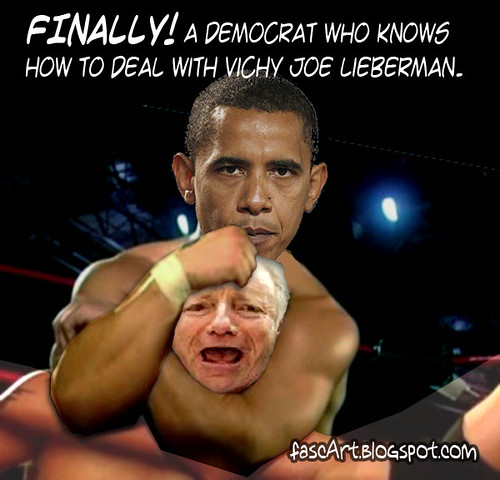
Joe Lieberman has felt it. So has Joe the Plumber.

It’s the Obama Touch — the squeeze on the biceps, the pat on the shoulder or the tap on the back that signals the displeasure of the commander in chief. Let others turn on the deep freeze or lose their cool when they’re annoyed. Obama prefers to deal with problems by taking them in hand — literally.

Just ask Vice President Joe Biden, who made a joke about Chief Justice John Roberts flubbing the oath of office last week and immediately felt his boss’s disapproval, in the form of Obama’s fingers on his back.

“[Obama] was castigating him. There’s no other way to put it,” says Joe Navarro, a former FBI special agent specializing in nonverbal communication. “Biden got it immediately,” he adds. “It looked like a little, subtle touch, but you could immediately see that Vice President Biden was contrite after that.”

In Biden’s case, Obama’s touch was itself a message, but in other cases, the Touch serves to underscore a spoken point — as reporters both on and off the campaign trail have learned.

During his visit to the White House press room last week, Obama responded to a Politico reporter’s unwanted question with a verbal rebuke — and a series of shoulder pats so emphatic as to be audible.

“We use touch to create effective communications, so if you’re not getting the message through my words, this is how we can establish better communication, with that touch,” explains Navarro.

Although Obama was clearly annoyed, Navarro adds, the gesture was conciliatory, rather than aggressive. “You didn’t see a closed fist or a pointed finger,” he says. “It was what we call full palmartouch.”

A scribe who personally received a hand-on-shoulder talking-to from the then-senator on the campaign trail says that the message was mixed. He says he knew Obama was irritated but that the Touch felt “confidential” and that he also had the sense that Obama was trying to connect with him.

The contact, he said, “seemed to have a twofold purpose — to express his annoyance and also to convince you that you were wrong.”

Another member of the press, who witnessed a similar moment with a colleague during the campaign, recalls thinking the gesture seemed intended to regain control over the conversation — friendly on the surface but also a little intimidating.

This dual experience is no accident; in sensitive situations, Obama typically uses touch to control and console simultaneously. An extreme example of this arose in June of last year, when Obama was approached in Philadelphia by an aggressive fan who wanted a photo with the candidate.

The man came close enough to pose a physical threat, and yet instead of backing away or pushing past him, Obama paused to grasp the man’s arm as he explained that he couldn’t stop for a picture.

“That was a way of placating, making him feel that ‘I’m here, I’m listening to you,’” says Maxine Lucille Fiel, a behavioral analyst and body language expert.

Navarro agrees, adding that the Touch is part of a larger skill set. “We establish empathetic channels of communication through touch. Very good social people will often touch on the shoulder, touch on the arm. It releases the chemical oxytocin. If you touch people, they perceive you as friendlier. Studies have shown that if a waiter or waitress touches you, they get a bigger tip.”

Obama, of course, is a fairly hands-on president in general, a frequent employer of the handshake-plus-upper-arm-grab and the friendly hand-on-back. He is less physical than the notorious LBJ, perhaps, but more so than his predecessor, who himself wound up under Obama’s guiding hand when the soon-to-be first couple came to visit the White House in November.

The move rankled some who saw it as usurping President Bush’s authority, yet the impulse was not atypical: Indeed, Obama himself recalls in “The Audacity of Hope” that he realized only after the fact that he had probably unnerved the Secret Service, and some of his colleagues, by unconsciously putting his arm around Bush during a White House gathering for new senators in 2005.

Obama’s admonishing touch can be almost as nuanced as his oratory. Take for example his infamous meeting with Joe “the Plumber” Wurzelbacher in Toledo, Ohio, last year. Joe got a friendly, encouraging slap on the side of the shoulder from Obama as he began to ask whether his company would have to pay higher taxes under Obama’s plan. But when Joe tried to interrupt Obama’s lengthy response, Obama subdued him with a gentle pat on the top of the shoulder, explaining, “I just want to answer your question.” The gesture read, “Please don’t interrupt me,” but it also said, “Hear me out, friend.”

Sometimes, however, the meaning of the Touch is not subtle at all. After Lieberman implied that Obama was soft on Iran last June, the two men met on the Senate floor later that day, and Obama greeted Lieberman with a pat on the shoulder and a handshake. But instead of letting go, Obama held on to Lieberman’s hand — and pulled him off to a corner to continue the discussion. (See video here)

Their subsequent conversation was reportedly lengthy and animated — but if they failed to resolve their differences, Obama will surely be in touch.

View source article

After the War on Terror

TEHRAN

In his first White House televised interview, with the Al Arabiya news network based in Dubai, United Arab Emirates, President Obama buried the lead: The war on terror is over.

Yes, the with-us-or-against-us global struggle — the so-called Long War — in which a freedom-loving West confronts the undifferentiated forces of darkness comprising everything from Al Qaeda to elements of the Palestinian national struggle under the banner of “Islamofascism” has been terminated.

What’s left is what matters: defeating terrorist organizations. That’s not a war. It’s a strategic challenge.

The new president’s abandonment of post-9/11 Bush doctrine is a critical breakthrough. It resolves nothing but opens the way for a rapprochement with a Muslim world long cast into the “against-us” camp. Nothing good in Israel-Palestine, Afghanistan or Iran could happen with that Manichean chasm.

Obama said, “The language we use matters.” It does. He said he would be “very clear in distinguishing between organizations like Al Qaeda — that espouse violence, espouse terror and act on it — and people who may disagree with my administration and certain actions, or may have a particular viewpoint in terms of how their countries should develop. We can have legitimate disagreements but still be respectful.”

Bush liked to distinguish between terrorists and the moderate, freedom-loving Muslims of his imagination. Obama makes a much more important distinction here: between those bent on the violent destruction of America and those who merely dislike, differ from or have been disappointed by America.

These days the great majority of the world’s Muslims fall into the latter category. Obama is right to take his case to them through the Arabic-language Al Arabiya network.

His tone represented a startling departure. He was subtle, respectful, self-critical and balanced where the Bush administration had been blunt, offensive, bombastic and one-sided in its embrace of an Israel-can-do-no-wrong policy.

Speaking as his Middle East envoy, George Mitchell, began an eight-day visit to the region, Obama described the mission as one of listening “because all too often the United States starts by dictating.”

Obama went further. Citing Muslim members of his own family and his experience of life in a Muslim country (Indonesia), he repositioned the national interest and his own role.

He defined his task as convincing Muslims that “Americans are not your enemy” and persuading Americans that respect for a Muslim world is essential. His objective, he said, was to promote not only American interests but those of ordinary people — read Muslims — suffering from “poverty and a lack of opportunity.”

That’s a significant ideological leap for an American leader, from the post-cold-war doctrine of supremacy to a new doctrine of inclusiveness dictated by globalization — from “the decider” to something close to “mediator-in-chief.” I applaud this shift because it is based in realism; a changed world is susceptible to American persuasion, not to American diktat.

Still, words do not alter the fact that the post-Gaza challenge facing Obama is immense. Here in Iran, where anti-American rhetoric is too significant a pillar of the 30-year-old Islamic Revolution to be lightly sacrificed, the response to the president’s interview was cool. It came as the government, citing the Israeli assault on Gaza, approved a bill to investigate and prosecute alleged war crimes anywhere in the world.

President Mahmoud Ahmedinejad said change under Obama was good but would only be credible if America apologized to Iran for its role in the 1953 coup, among other things. The hard-line daily Kayhan said: “Obama follows Bush’s footsteps.”

In fact, Obama said he would pursue dialogue with Iran and praised the greatness of Persian civilization even as he deplored Iranian threats against Israel, its nuclear program and “support of terrorist organizations in the past.”

Any U.S.-Iranian dialogue will have to be rooted in a word Obama favors: respect. The United States has underestimated Iranian pride and the fierce attachment to its independence of a nation that has known its share of Western meddling.

Carrots and sticks will lead nowhere. Nor will an exclusive focus on the nuclear issue that fails to examine the whole range of American and Iranian interests, some shared, some hotly contested.

What is certain, with Iran as with the rest of the Middle East, is that there will be setbacks. Terrorists will attack. Obama will be denounced. But as Mitchell knows from his experience of bringing peace to Northern Ireland, the critical thing is perseverance.

Tony Blair, now also a Middle East envoy and Mitchell’s partner in Belfast, once put it to me this way: “The only reason we got the breakthrough in Northern Ireland was we did in the end focus on it with such intensity over such a period that every little thing that went wrong — and everything that could go wrong did at some point — was all the time being managed and rectified.” He described the approach as: “Any time we can’t solve it, we have to manage it, until we can start to solve it again.”

Bush had the ideological framework wrong. Obama has righted it by ending the war on terror. Now comes the hard Middle Eastern slog of solve-manage-solve. It will need the president’s unswerving focus.

View source article

Obama: An "Aloha Zen" Prez


WASHINGTON — The capital flew into a bit of a tizzy when, on his first full day in the White House, President Obama was photographed in the Oval Office without his suit jacket. There was, however, a logical explanation: Mr. Obama, who hates the cold, had cranked up the thermostat.

“He’s from Hawaii, O.K.?” said Mr. Obama’s senior adviser, David Axelrod, who occupies the small but strategically located office next door to his boss. “He likes it warm. You could grow orchids in there.”

Thus did a rule of the George W. Bush administration — coat and tie in the Oval Office at all times — fall by the wayside, only the first of many signs that a more informal culture is growing up in the White House under new management. Mr. Obama promised to bring change to Washington and he has — not just in substance, but in presidential style.

Although his presidency is barely a week old, some of Mr. Obama’s work habits are already becoming clear. He shows up at the Oval Office shortly before 9 in the morning, roughly two hours later than his early-to-bed, early-to-rise predecessor. Mr. Obama likes to have his workout — weights and cardio — first thing in the morning, at 6:45. (Mr. Bush slipped away to exercise midday.)

He reads several papers, eats breakfast with his family and helps pack his daughters, Malia, 10, and Sasha, 7, off to school before making the 30-second commute downstairs — a definite perk for a man trying to balance work and family life. He eats dinner with his family, then often returns to work; aides have seen him in the Oval Office as late as 10 p.m., reading briefing papers for the next day.

“Even as he is sober about these challenges, I have never seen him happier,” Mr. Axelrod said. “The chance to be under the same roof with his kids, essentially to live over the store, to be able to see them whenever he wants, to wake up with them, have breakfast and dinner with them — that has made him a very happy man.”

In the West Wing, Mr. Obama is a bit of a wanderer. When Mr. Bush wanted to see a member of his staff, the aide was summoned to the Oval Office. But Mr. Obama tends to roam the halls; one day last week, he turned up in the office of his press secretary, Robert Gibbs, who was in the unfortunate position of having his feet up on the desk when the boss walked in.

“Wow, Gibbs,” the press secretary recalls the president saying. “Just got here and you already have your feet up.” Mr. Gibbs scrambled to stand up, surprising Mr. Obama, who is not yet accustomed to having people rise when he enters a room.

Under Mr. Bush, punctuality was a virtue. Meetings started early — the former president once locked Secretary of State Colin L. Powell out of the Cabinet Room when Mr. Powell showed up a few minutes late — and ended on time. In the Obama White House, meetings start on time and often finish late.

When the president invited Congressional leaders to 1600 Pennsylvania Avenue last week to talk about his economic stimulus package, the session ran so long that Mr. Obama wound up apologizing to the lawmakers — even as he kept them talking, engaging them in the details of the legislation far more than was customary for Mr. Bush.

“He was concerned that he was keeping us,” said Representative Eric Cantor of Virginia, the Republican whip. “He said, ‘I know we need to get you all out of here at a certain time.’ But we continued the discussion. What are you going to say? It’s the president.”

If Mr. Obama’s clock is looser than Mr. Bush’s, so too are his sartorial standards. Over the weekend, Mr. Obama’s first in office, his aides did not quite know how to dress. Some showed up in jeans (another no-no under Mr. Bush), some in coats and ties.

So the president issued an informal edict for “business casual” on weekends — and set his own example. He showed up Saturday for a briefing with his chief economic adviser, Lawrence H. Summers, dressed in slacks and a gray sweater over a white buttoned-down shirt. Veterans of the Bush White House are shocked.

“I’ll never forget going to work on a Saturday morning, getting called down to the Oval Office because there was something he was mad about,” said Dan Bartlett, who was counselor to Mr. Bush. “I had on khakis and a buttoned-down shirt, and I had to stand by the door and get chewed out for about 15 minutes. He wouldn’t even let me cross the threshold.”

Mr. Obama has also brought a more relaxed sensibility to his public appearances. David Gergen, an adviser to both Republican and Democratic presidents, said Mr. Obama seemed to exude an “Aloha Zen,” a kind of comfortable calm that, Mr. Gergen said, reflects a man who “seems easygoing, not so full of himself.”

At the Capitol on Tuesday, Mr. Obama startled lawmakers by walking up to the microphones in a Senate corridor to talk to reporters, as if he were still a senator. Twice, during formal White House ceremonies, Mr. Obama called out to aides as television cameras rolled, as he did on Monday when the director of the Environmental Protection Agency, Lisa P. Jackson, asked for a presidential pen.

“Hey, Lisa,” Mr. Obama called out to his staff secretary, Lisa Brown, “does she get this pen?”

Mr. Obama’s daily schedule seems flexible. Mr. Bush began each day, Monday through Saturday, with a top-secret intelligence briefing on security threats against the United States. Mr. Obama gets the “president’s daily brief” on Sundays as well, though unlike his predecessor, he does not necessarily put it first on his agenda.

Sometimes Mr. Obama’s economic briefing, a new addition to the presidential schedule, comes first. Its attendees vary depending on the day, aides said. On Tuesday, the newly sworn-in Treasury secretary, Timothy F. Geithner, joined Mr. Summers to talk about financial and credit markets. On Wednesday, Paul A. Volcker, the former chairman of the Federal Reserve and informal Obama adviser, was on hand to discuss regulatory reform.

Mr. Obama has also maintained the longstanding presidential tradition of weekly lunches with his vice president. For Mr. Obama, lunch generally means a cheeseburger, chicken or fish in his small dining room off the Oval Office. There is also a new addition to White House cuisine: the refrigerators are stocked with the president’s favorite organic brew, Honest Tea, in Mr. Obama’s preferred flavors of Black Forest Berry and Green Dragon.

If there is one thing Mr. Obama has not gotten around to changing, it is the Oval Office décor.

When Mr. Bush moved in, he exercised his presidential decorating prerogatives and asked his wife, Laura, to supervise the design of a new rug. Mr. Bush loved to regale visitors with the story of the rug, whose sunburst design, he liked to say, was intended to evoke a feeling of optimism.

The rug is still there, as are the presidential portraits Mr. Bush selected — one of Washington, one of Lincoln — and a collection of decorative green and white plates. During a meeting last week with retired military officials, before he signed an executive order shutting down the prison at Guantánamo Bay, Cuba, Mr. Obama surveyed his new environs with a critical eye.

“He looked around,” said one of his guests, retired Rear Adm. John D. Hutson, “and said, ‘I’ve got to do something about these plates. I’m not really a plates kind of guy.’ ”

View source article

quarta-feira, 28 de janeiro de 2009

Revealed: the letter Obama team hope will heal Iran rift

Symbolic gesture gives assurances that US does not want to topple Islamic regime

Obama administration officials have drafted a letter to Iran from the president aimed at unfreezing US-Iranian relations and opening the way for face-to-face talks, the Guardian has learned.

The US state department has been working on drafts of the letter since Obama was elected on 4 November. It would be in reply to a lengthy letter of congratulations sent by the Iranian president, Mahmoud Ahmadinejad, on 6 November.

Diplomats say Obama's letter would be a symbolic gesture to mark a change in tone from the hostile one adopted by the Bush administration, which portrayed Iran as part of an "axis of evil".

It would be intended to allay the suspicions of Iran's leaders and pave the way for Obama to engage them directly, a break with past policy.

State department officials have written at least three drafts of the letter, which gives assurances that Washington does not want to overthrow the Islamic regime but merely seeks a change in its behaviour. The letter would be addressed to the Iranian people and sent directly to Iran's supreme leader, Ayatollah Ali Khamenei, or released as an open letter.

One draft proposal suggests Iran should compare its relatively low standard of living with that of some of its more prosperous neighbours and contemplate the benefits of losing its pariah status in the west. Although the tone is conciliatory, it also calls on Iran to end what the US calls state sponsorship of terrorism.

The letter is being considered by the new secretary of state, Hillary Clinton, as part of a sweeping review of US policy on Iran. A decision on sending it is not expected until the review is complete.

In an interview on Monday with al-Arabiya television network, Obama hinted at a more friendly approach towards Iran.

The Iranian president, Mahmoud Ahmadinejad, said yesterday that he was waiting patiently to see what the Obama administration would come up with. "We will listen to the statements closely, we will carefully study their actions and if there are real changes, we will welcome it," he said.

Ahmadinejad, who confirmed he would stand for election again in June, said it was unclear whether the Obama administration was intent on just a shift in tactics or seeking fundamental change. He called on the US to apologise for its actions against Iran over the past 60 years, including US support for a 1953 coup that ousted the democratically elected government and the US shooting down of an Iranian passenger plane in 1988.

US concern about Iran mainly centres on its uranium enrichment programme, which Washington claims is intended to provide the country with a nuclear weapons capability. Diplomatic moves are given increased urgency by fears that Israel might take unilateral action to bomb ­Iranian nuclear facilities.

The state department refused to comment yesterday on the options under review.

John Sullivan, a state department spokesman, said Obama was taking the lead on Iran policy and that it was too early to say what that policy would be. "I cannot comment on policy planning stages. We are still looking at all the options on the table and figuring out the best way forward," Sullivan said.

But diplomatic sources said many options were under review about how to signal to the Iranians that there was a change in attitude in Washington, and that Obama was looking for direct talks.

One of the chief Iranian concerns revolves around suspicion that the US is engaged in covert actions aimed at regime change, including support for separatist groups in areas such as Kurdistan, Sistan-Baluchestan and Khuzestan. The state department has repeatedly denied there is any US support for such groups.

In its dying days, the Bush administration was planning to open a US interests section in the Iranian capital Tehran, one step down from an embassy. Bush's secretary of state, Condoleezza Rice, said it never happened because attention was diverted by the Russian invasion of Georgia. Others say that rightwingers in the Bush administration mounted a rearguard action to block it.

The idea has resurfaced but if there are direct talks with Iran, it may be decided that a diplomatic presence would obviate the need for a diplomatic mission in Tehran, at least in the short term.

While Obama is taking the lead on Iran policy, the administration will shortly announce that Dennis Ross will become a special envoy to Iran, following the appointments last week of George Mitchell, the veteran US mediator, as special envoy to the Middle East and Richard Holbrooke, who helped broker the Bosnia peace agreement, as special envoy to Pakistan and Afghanistan.

Ross, who took a leading role in the Middle East peace talks in the Clinton administration, will be responsible on a day-to-day basis for implementing policy towards Iran.

In a graphic sign of Iranian mistrust, the hardline newspaper Kayhan, which is considered close to Ayatollah Ali Khamenei, has denounced Ross as a "Zionist lobbyist".

Saeed Leylaz, a Tehran-based analyst, said a US letter would have to be accompanied by security guarantees and an agreement to drop economic sanctions. "If they send such a letter it will be a very significant step towards better ties but they should be careful in not thinking Tehran will respond immediately," he said.

"There will be disputes inside the system about such a letter. There are lot of radicals who don't want to see ordinary relations between Tehran and Washington. To convince Iran, they should send a very clear message that they are not going to try to destroy the regime."

View source article

Commentary: Focus on First 100 Days is Absurd

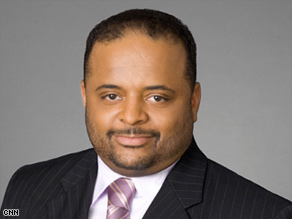
Editor's note: A nationally syndicated columnist, Roland S. Martin is the author of "Listening to the Spirit Within: 50 Perspectives on Faith" and "Speak, Brother! A Black Man's View of America." Visit his Web site for more information.

Roland S. Martin says it's wrong to judge a president based on what he can accomplish in the first 100 days.

Roland S. Martin says it's wrong to judge a president based on what he can accomplish in the first 100 days.

(CNN) -- The new president has been in office one week and already the clock is ticking as to whether or not he can get a lot accomplished in the first 100 days of his presidency.

Did I miss the memo? I thought the presidency is a four-year term.

If you turn on television or radio, commentators, correspondents and talk show hosts are speaking in breathless tones about the need for President Barack Obama to get off to a fast start and show all kinds of accomplishments in the first 100 days.

And we are given the sense that if he hasn't signed a lot of major bills into law and issued a slew of important executive orders, then he will have failed.

Oh stop it.

Lest you think this is about Obama, it isn't. I thought it was just as stupid to put Presidents George W. Bush, Bill Clinton and George H.W. Bush on some kind of silly shot clock.

This Washington, D.C., parlor game happens every four or eight years. It has gotten so silly that some folks actually analyzed Obama's first 100 hours. It took that long to figure out the quickest path from the presidential sleeping quarters to the Oval Office!

The problem with so much emphasis being placed on the first 100 days is that a premium is placed on speed as opposed to thoughtfulness.

Take the president's stimulus package.

We are looking at spending $900 billion, and Congress is proceeding so fast that I doubt most of the members have actually read the entire bill. We know from history that moving with lightning speed leads to all kinds of problems later on.

The Patriot Act was rushed through, and we didn't find out about some of the weird provisions until after it was already signed into law. Oops! Sorry, too late.

The same with the bailout of the banking industry. We didn't discover until after it was too late that there weren't enough provisions focused on accountability of the funds, as well as mandates to ensure banks didn't sit on the cash to buy other banks but instead used it to open up the credit lines.

These measures are too doggone important for us to act like we're watching the movie "The Fast and the Furious."

The fundamental problem with this approach is that every president operates as if he is President Franklin Delano Roosevelt, who set the initial standard for decisive action in the first 100 days of his presidency. Ever since then, my media comrades have tried to hold each president to this same timetable, not realizing that times are different, and the needs of the nation are different.

I believe in taking action when necessary. But I also realize that doing something for the sake of doing something is dangerous, and sets a horrible precedent. And we are seeing this now with the stimulus package.

The House is scheduled to vote on the measure today with very little discussion about the nuances of the bill. Questions of oversight, how to manage the spending of billions of dollars, and whether the right programs will be funded initially all have gone by the wayside in order to, as some have suggested, give the president a quick victory out of the gate.

As a basketball player, President Obama knows that you can have a hot first quarter, hitting every shot and grabbing every rebound, and that could very well propel you to a decisive victory. But a basketball game is four quarters, and if you only play the first half well, you can blow the game in the second half.

We need thoughtful, measured political leaders who have studied all the angles and are making the right calls. Let's focus on our long-term future, and not be bogged down in meeting a ridiculous report card for the satisfaction of the media.

The opinions expressed in this column are solely those of Roland S. Martin.

View source article

CNN: The Arab reaction

CNN: How Muslims view Obama

terça-feira, 27 de janeiro de 2009

Jon Stewart on Inauguration Media Coverage


"If you love an administration, set it free. If it comes back, we're all moving to Canada."

Jon Stewart roasts Rush Limbaugh

The Al-Arabiya Interview


Part 1

Part 2

Elevating science, elevating democracy

All right, I was weeping too.

To be honest, the restoration of science was the least of it, but when Barack Obama proclaimed during his Inaugural Address that he would “restore science to its rightful place,” you could feel a dark cloud lifting like a sigh from the shoulders of the scientific community in this country.

When the new president went on vowing to harness the sun, the wind and the soil, and to “wield technology’s wonders,” I felt the glow of a spring sunrise washing my cheeks, and I could almost imagine I heard the music of swords being hammered into plowshares.

Wow. My first reaction was to worry that scientists were now in the awkward position of being expected to save the world. As they say, be careful what you wish for.

My second reaction was to wonder what the “rightful place” of science in our society really is.

The answer, I would argue, is On a Pedestal — but not for the reasons you might think.

Forget about penicillin, digital computers and even the Big Bang, passing fads all of them.

The knock on science from its cultural and religious critics is that it is arrogant and materialistic. It tells us wondrous things about nature and how to manipulate it, but not what we should do with this knowledge and power. The Big Bang doesn’t tell us how to live, or whether God loves us, or whether there is any God at all. It provides scant counsel on same-sex marriage or eating meat. It is silent on the desirability of mutual assured destruction as a strategy for deterring nuclear war.

Einstein seemed to echo this thought when he said, “I have never obtained any ethical values from my scientific work.” Science teaches facts, not values, the story goes.

Worse, not only does it not provide any values of its own, say its detractors, it also undermines the ones we already have, devaluing anything it can’t measure, reducing sunsets to wavelengths and romance to jiggly hormones. It destroys myths and robs the universe of its magic and mystery.

So the story goes.

But this is balderdash. Science is not a monument of received Truth but something that people do to look for truth.

That endeavor, which has transformed the world in the last few centuries, does indeed teach values. Those values, among others, are honesty, doubt, respect for evidence, openness, accountability and tolerance and indeed hunger for opposing points of view. These are the unabashedly pragmatic working principles that guide the buzzing, testing, poking, probing, argumentative, gossiping, gadgety, joking, dreaming and tendentious cloud of activity — the writer and biologist Lewis Thomas once likened it to an anthill — that is slowly and thoroughly penetrating every nook and cranny of the world.

Nobody appeared in a cloud of smoke and taught scientists these virtues. This behavior simply evolved because it worked.

It requires no metaphysical commitment to a God or any conception of human origin or nature to join in this game, just the hypothesis that nature can be interrogated and that nature is the final arbiter. Jews, Catholics, Muslims, atheists, Buddhists and Hindus have all been working side by side building the Large Hadron Collider and its detectors these last few years.

And indeed there is no leader, no grand plan, for this hive. It is in many ways utopian anarchy, a virtual community that lives as much on the Internet and in airport coffee shops as in any one place or time. Or at least it is as utopian as any community largely dependent on government and corporate financing can be.

Arguably science is the most successful human activity of all time. Which is not to say that life within it is always utopian, as several of my colleagues have pointed out in articles about pharmaceutical industry payments to medical researchers.

But nobody was ever sent to prison for espousing the wrong value for the Hubble constant. There is always room for more data to argue over.

So if you’re going to get gooey about something, that’s not so bad.

It is no coincidence that these are the same qualities that make for democracy and that they arose as a collective behavior about the same time that parliamentary democracies were appearing. If there is anything democracy requires and thrives on, it is the willingness to embrace debate and respect one another and the freedom to shun received wisdom. Science and democracy have always been twins.

Today that dynamic is most clearly and perhaps crucially tested in China. As I pondered Mr. Obama’s words, I thought of Xu Liangying, an elderly Chinese physicist and Einstein scholar I met a couple of years ago, who has spent most of his life under house arrest for upholding Einstein’s maxim that there is no science without freedom of speech.

The converse might also be true. The habit of questioning that you learn in physics is invaluable in the rest of society. As Fang Lizhi, Dr. Xu’s fellow dissident whose writings helped spark the 1989 Tiananmen Square demonstrations and who now teaches at the University of Arizona, said in 1985, “Physics is more than a basis for technology; it is a cornerstone of modern thought.”

If we are not practicing good science, we probably aren’t practicing good democracy. And vice versa.

Science and democracy have been the watchwords of Chinese political aspirations for more than a century. When the Communist Party took power it sought to appropriate at least the scientific side of the equation. Here, for example, is what Hu Yaobang, the party’s general secretary, said in 1980. “Science is what it is simply because it can break down fetishes and superstitions and is bold in explorations and because it opposes following the beaten path and dares to destroy outmoded conventions and bad customs.”

Brave words that have yet to be allowed to come true in China. Mr. Hu was purged, and in fact it was to mourn his death that students first began assembling in Tiananmen Square in 1989.

Dr. Fang got in trouble initially because he favored the Big Bang, but that was against Marxist orthodoxy that the universe was infinitely unfolding. Marxism, it might be remembered, was once promoted as a scientific theory, but some subjects were off-limits.

But once you can’t talk about one subject, the origin of the universe, for example, sooner or later other subjects are going to be off-limits, like global warming, birth control and abortion, or evolution, the subject of yet another dustup in Texas last week.

There is no democracy in China, and some would argue that despite that nation’s vast resources and potential, there will not be vigorous science there either until the Chinese leaders take seriously what Mao proclaimed back in 1955 and then cynically withdrew: Let a hundred flowers bloom, let a hundred schools of thought contend.

In the meantime I look forward to Mr. Obama’s cultivation of our own wild and beautiful garden.

View source article

Obama Gives First TV Interview to Arab Network

Published: January 27, 2009

Filed at 7:01 a.m. ET

CAIRO, Egypt (AP) -- President Barack Obama on Tuesday chose an Arabic satellite TV network for his first formal television interview as president, delivering a message to the Muslim world that ''Americans are not your enemy.''

The interview underscored Obama's commitment to repair relations with the Muslim world that have suffered under the previous administration.

The president expressed an intention to engage the Middle East immediately and his new envoy to the region, former Sen. George J. Mitchell, was expected to arrived in Egypt on Tuesday for a visit that will also take him to Israel, the West Bank, Jordan, Turkey and Saudi Arabia.

''My job to the Muslim world is to communicate that the Americans are not your enemy,'' Obama told the Saudi-owned, Dubai-based Al-Arabiya news channel.

Obama said the U.S. had made mistakes in the past but ''that the same respect and partnership that America had with the Muslim world as recently as 20 or 30 years ago, there's no reason why we can't restore that.''

During his presidency, former President George W. Bush gave several interviews to Al-Arabiya but the wars he launched in Iraq and Afghanistan prompted a massive backlash against the U.S. in the Muslim world.

Al-Arabiya has scored interviews with top U.S. officials in the past, including Bush and Secretary of State Condoleezza Rice.

The Saudi-owned channel is seen by some in Washington as more balanced in its coverage than its Qatar-funded rival Al-Jazeera, which the previous White House administration complained had an anti-American bias.

Obama called for a new partnership with the Muslim world ''based on mutual respect and mutual interest.'' He talked about growing up in Indonesia, the Muslim world's most populous nation, and noted that he has Muslim relatives.

The new president said he felt it was important to ''get engaged right away'' in the Middle East and had directed Mitchell to talk to ''all the major parties involved.'' His administration would craft an approach after that, he said in the interview.

''What I told him is start by listening, because all too often the United States starts by dictating,'' Obama told the interviewer.

The president reiterated the U.S. commitment to Israel as an ally and to its right to defend itself. But he suggested that both Israel and the Palestinians have hard choices to make.

''I do believe that the moment is ripe for both sides to realize that the path that they are on is one that is not going to result in prosperity and security for their people,'' he said, calling for a Palestinian state that is contiguous with internal freedom of movement and can trade with neighboring countries.

Obama also said that recent statements and messages issued by the al-Qaida terror network suggest they do not know how to deal with his new approach.

''They seem nervous,'' he told the interviewer. ''What that tells me is that their ideas are bankrupt.''

In his latest message on Jan. 14, al-Qaida leader Osama bin Laden said Obama had been left with a ''heavy inheritance'' of Bush's wars.

Shortly after the election, the network's number two, Ayman al-Zawahri used a demeaning racial term for a black American who does the bidding of whites to describe Obama.

The message suggested the terror network was worried Obama could undermine its rallying cry that the U.S. is an enemy oppressor.

View source article

IN ACCORDANCE WITH TITLE 17 U.S.C. SECTION 107, THIS MATERIAL IS DISTRIBUTED WITHOUT PROFIT TO THOSE WHO HAVE EXPRESSED A PRIOR INTEREST IN RECEIVING THE INCLUDED INFORMATION FOR RESEARCH AND EDUCATIONAL PURPOSES. OBAMABRASIL HAS NO AFFILIATION WHATSOEVER WITH THE ORIGINATOR OF THIS ARTICLE NOR IS OBAMABRASIL ENDORSED OR SPONSORED BY THE ORIGINATOR.

"VIEW SOURCE ARTICLE" LINKS ARE PROVIDED AS A CONVENIENCE TO OUR READERS AND ALLOW FOR VERIFICATION OF AUTHENTICITY. HOWEVER, AS ORIGINATING PAGES ARE OFTEN UPDATED BY THEIR ORIGINATING HOST SITES, THE VERSIONS POSTED ON TO MAY NOT MATCH THE VERSIONS OUR READERS VIEW WHEN CLICKING THE "VIEW SOURCE ARTICLE" LINKS.

PBS FRONTLINE: The Brazilian Barack Obama


You may remember PBS FRONTLINE/World's story about the Brazilian Barack Obama.

That story has been re-edited and included in our broadcast nationwide on Tuesday January 27th, so if you or your friends are in the U.S, tell them to tune in to PBS tonight (check local listings for time)!

If not, check out the website - the full video will be available to watch on January 28th, and there are many new, wonderful features on the site that address the different ways that race and racism affect both Brazil and the U.S.

There is also a terrific photo slideshow following the Brazilian politician Claudio Henrique to the U.S, where he attended Obama's inauguration wearing a fedora!

see:

www.pbs.org/frontlineworld

We have a Facebook page now too - please join our community: http://www.facebook.com/pages/PBS-FRONTLINEWorld-Global-Storytellers/36142430249

Please share the news widely!

segunda-feira, 26 de janeiro de 2009

Obama aims for oil independence


Obama on the three steps to energy independence

President Barack Obama has called for the US to become energy independent, saying its reliance on foreign oil and global warming posed threats.

Outlining his energy priorities, he said the country would not be held "hostage to dwindling resources, hostile regimes, and a warming planet".

He called for greater fuel efficiency and an "energy economy" aimed at creating millions of jobs.

He also ordered a review of whether states can set car emission standards.

This challenges a Bush administration decision which favoured a national standard for vehicle pollution.

Meanwhile, Secretary of State Hillary Clinton picked Todd Stern - who took part in the Kyoto Protocol negotiations on climate change from 1997 to 1999 - as her envoy for climate change, the state department said.

Mr Stern, who served under former President Bill Clinton from 1993 to 2001, will be the Obama administration's principal adviser on international climate policy and strategy as well as its chief climate negotiator.

"Containing climate change will require nothing less than transforming the global economy from a high-carbon to a low-carbon energy base," said Mr Stern after Mrs Clinton announced his appointment.

"But done right, this can free us from our dependence on foreign oil and become a driver for economic growth in the 21st Century."

Crossroads of history

At his first White House news conference since becoming president, Mr Obama said he would reverse America's dependence on foreign oil while creating jobs, but warned there was no "quick fix".

OBAMA ENERGY PLAN
A customer at a petrol pump

Reverse US dependence on foreign energy
Review of decision to block states from setting own emission targets
Orders the transportation department to come up with new short-term rules on how carmakers can improve fuel efficiency
Federal buildings to become more efficient
Double 'green' energy from wind, sun and biofuels over next three years

"We will commit ourselves to steady, focused, pragmatic pursuit of an America that is freed from our energy dependence, and empowered by a new energy economy that puts millions of our citizens to work."

He added: "Now is the time to meet the challenge of this crossroads of history, by choosing a future safer for our country, prosperous for our planet, and sustainable."

Mr Obama ordered the Environmental Protection Agency (EPA) to review its refusal of a waiver which had previously allowed California to set its own - stricter - vehicle emission and fuel efficiency standards.

He said California had taken bold moves in implementing the standards.

Mr Obama said: "The days of Washington dragging its heels are over.

"My administration will not deny facts. We will be guided by them."

His statement that the US would lead on climate change was a clear swipe at his predecessor's sceptical view of global warming, says the BBC's James Coomarasamy in Washington.

Energy efficiency drive

California Governor Arnold Schwarzenegger had asked Mr Obama to reverse the Bush administration's insistence on a single, national standard.

California wants a 30% reduction in motor vehicle greenhouse gas emissions by 2016, achieved by improving fuel efficiency standards.

President Obama also ordered the transportation department to come up with new short-term rules on how carmakers can improve fuel efficiency.

A 2007 law required that new cars and trucks produced by 2020 obtain 35 miles per gallon of fuel (about 15km/litre).

However, then-President George W Bush did not put in place the regulations to enable the law to be carried out.

Emissions from car exhaust (file photo)
Car exhaust is a major contributor to greenhouse gas emissions

The new rules Mr Obama wants to put in place would mean the new standard is reached by 2011, the New York Times said.

The president also announced plans to make all federal government buildings more energy efficient, and pledged to cut families's energy bills by "weatherising" 2.5 million homes.

He also said the US would double its capacity for "green" energy generation, from sources such as wind, sun, and biofuels, over the next three years.

More than 3,000 miles of transmission lines would be established to transmit the energy.

In the European Union, a recently agreed climate package set out average emission targets for the whole car industry of 120g of CO2 per kilometre by 2012 for new cars, compared with current levels of 160g/km.

The EU target for 2020 is 95g/km. But CO2 emissions vary from car to car, and manufacturers have been given until 2015 to meet their specific targets for each model.

View source article

Oh Happy Day!


Olbermann: Bush guilty of torture

Olbermann: More on the BarackBerry

Olbermann: The Power of Won

Keeping an eye on hatemongers

Latest developments on the home and diplomatic fronts

Ken Camp | GOP Links Nomination to Torture Prosecutions
http://www.truthout.org/012609J
Ken Camp, The Northwest Progressive Institute Advocate: "In an effort to derail the nomination of Attorney General-designate Eric Holder, it seems Senate Republicans are now resorting to extortion. They'll confirm Holder if he promises not to prosecute any Bush Administration officials for any involvement in acts of torture, according to Senator Sheldon Whitehouse(D-RI). Anyone familiar with the criminal justice system - especially those with experience as prosecutors or judges - should know that a prosecutor should make no determination about who to prosecute before he or she has all the facts, and particularly not in response to legislative pressure."

US Weighs Strategies to Stem Home Foreclosures
http://www.truthout.org/012609L
Peter Y. Hong and Maura Reynolds, The Los Angeles Times: "The Obama administration is promising an aggressive fight against the rising tide of home foreclosures, but officials have yet to decide what strategy -- or combination of strategies -- they will use. Among the possibilities being pushed by various interest groups are a six-month foreclosure moratorium, a doubling of the mortgage interest deduction, a tax credit for those who buy homes and a federally sponsored mortgage refinancing program. But it's been two years since foreclosures began to mount. And government and the financial industry have been unable to agree on a plan largely because they cannot resolve a central issue: How should losses be divided between borrowers and lenders?"

Experts: Mitchell as US Mideast Envoy Revitalizes Peace Process
http://www.truthout.org/012609M
Agence France-Presse: "The choice of former US senator George Mitchell as special envoy to the Middle East shows that President Barack Obama is serious about changing the direction of US policy in the Middle East, experts say. Several names were floated over the past weeks as possible special envoys to the region, including those of Dennis Ross, former president Bill Clinton's envoy to the region, and former US ambassador to Cairo Daniel Kurtzer."

And last but not least:

Obama to Let California Set Its Own Auto Emissions Standards
http://www.truthout.org/012609O
Kim Chipman, Bloomberg: "President Barack Obama is set to allow California to regulate greenhouse-gas emissions for autos, reversing a Bush administration ruling, people familiar with the matter said. More than a dozen other US states may then adopt the same standards, which are opposed by automakers. Obama, who will discuss his energy and environmental plans tomorrow, also will start finalizing new rules requiring cars and light trucks to be more fuel-efficient, the people said."

Will Obama save Liberalism?

All good things must come to an end. Jan. 20, 2009, marked the end of a conservative era.

Since Ronald Reagan’s election in 1980, conservatives of various sorts, and conservatisms of various stripes, have generally been in the ascendancy. And a good thing, too! Conservatives have been right more often than not — and more often than liberals — about most of the important issues of the day: about Communism and jihadism, crime and welfare, education and the family. Conservative policies have on the whole worked — insofar as any set of policies can be said to “work” in the real world. Conservatives of the Reagan-Bush-Gingrich-Bush years have a fair amount to be proud of.

They also have some regrets. They’ll have time to ponder those as liberals now take their chance to govern.

Lest conservatives be too proud, it’s worth recalling that conservatism’s rise was decisively enabled by liberalism’s weakness. That weakness was manifested by liberalism’s limp reaction to the challenge from the New Left in the 1960s, became more broadly evident during the 1970s, and culminated in the fecklessness of the Carter administration at the end of that decade.

In 1978, the Harvard political philosopher Harvey Mansfield diagnosed the malady: “From having been the aggressive doctrine of vigorous, spirited men, liberalism has become hardly more than a trembling in the presence of illiberalism. ... Who today is called a liberal for strength and confidence in defense of liberty?”

Over the next three decades, it was modern conservatism, led at the crucial moment by Ronald Reagan, that assumed the task of defending liberty with strength and confidence. Can a revived liberalism, faced with a new set of challenges, now pick up that mantle?

The answer lies in the hands of one man: the 44th president. If Reagan’s policies had failed, or if he hadn’t been politically successful, the conservative ascendancy would have been nipped in the bud. So with President Obama today. Liberalism’s fate rests to an astonishing degree on his shoulders. If he governs successfully, we’re in a new political era. If not, the country will be open to new conservative alternatives.

We don’t really know how Barack Obama will govern. What we have so far, mainly, is an Inaugural Address, and it suggests that he may have learned more from Reagan than he has sometimes let on. Obama’s speech was unabashedly pro-American and implicitly conservative.

Obama appealed to the authority of “our forebears,” “our founding documents,” even — political correctness alert! — “our founding fathers.” He emphasized that “we will not apologize for our way of life nor will we waver in its defense.” He spoke almost not at all about rights (he had one mention of “the rights of man,” paired with “the rule of law” in the context of a discussion of the Constitution). He called for “a new era of responsibility.”

And he appealed to “the father of our nation,” who, before leading his army across the Delaware on Christmas night, 1776, allegedly “ordered these words be read to the people: ‘Let it be told to the future world that in the depth of winter, when nothing but hope and virtue could survive, that the city and the country, alarmed at one common danger, came forth to meet it.’”

For some reason, Obama didn’t identify the author of “these timeless words” — the only words quoted in the entire speech. He’s Thomas Paine, and the passage comes from the first in his series of Revolutionary War tracts, “The Crisis.” Obama chose to cloak his quotation from the sometimes intemperate Paine in the authority of the respectable George Washington.

Sixty-seven years ago, a couple of months after Pearl Harbor, at the close of a long radio address on the difficult course of the struggle we had just entered upon, another liberal president, Franklin Delano Roosevelt, also told the story of Washington ordering that “The Crisis” be read aloud, and also quoted Paine. But he turned to the more famous — and more stirring — passage with which Paine begins his essay:

“These are the times that try men’s souls. The summer soldier and the sunshine patriot will, in this crisis, shrink from the service of their country; but he that stands by it now, deserves the love and thanks of man and woman. Tyranny, like hell, is not easily conquered; yet we have this consolation with us, that the harder the conflict, the more glorious the triumph.”

That exhortation was appropriate for World War II. Today, the dangers are less stark, and the conflicts less hard. Still, there will be trying times during Obama’s presidency, and liberty will need staunch defenders. Can Obama reshape liberalism to be, as it was under F.D.R., a fighting faith, unapologetically patriotic and strong in the defense of liberty? That would be a service to our country.

This is William Kristol’s last column.

View source article

Bad Faith Economics

As the debate over President Obama’s economic stimulus plan gets under way, one thing is certain: many of the plan’s opponents aren’t arguing in good faith. Conservatives really, really don’t want to see a second New Deal, and they certainly don’t want to see government activism vindicated. So they are reaching for any stick they can find with which to beat proposals for increased government spending.

Some of these arguments are obvious cheap shots. John Boehner, the House minority leader, has already made headlines with one such shot: looking at an $825 billion plan to rebuild infrastructure, sustain essential services and more, he derided a minor provision that would expand Medicaid family-planning services — and called it a plan to “spend hundreds of millions of dollars on contraceptives.”

But the obvious cheap shots don’t pose as much danger to the Obama administration’s efforts to get a plan through as arguments and assertions that are equally fraudulent but can seem superficially plausible to those who don’t know their way around economic concepts and numbers. So as a public service, let me try to debunk some of the major antistimulus arguments that have already surfaced. Any time you hear someone reciting one of these arguments, write him or her off as a dishonest flack.

First, there’s the bogus talking point that the Obama plan will cost $275,000 per job created. Why is it bogus? Because it involves taking the cost of a plan that will extend over several years, creating millions of jobs each year, and dividing it by the jobs created in just one of those years.

It’s as if an opponent of the school lunch program were to take an estimate of the cost of that program over the next five years, then divide it by the number of lunches provided in just one of those years, and assert that the program was hugely wasteful, because it cost $13 per lunch. (The actual cost of a free school lunch, by the way, is $2.57.)

The true cost per job of the Obama plan will probably be closer to $100,000 than $275,000 — and the net cost will be as little as $60,000 once you take into account the fact that a stronger economy means higher tax receipts.

Next, write off anyone who asserts that it’s always better to cut taxes than to increase government spending because taxpayers, not bureaucrats, are the best judges of how to spend their money.

Here’s how to think about this argument: it implies that we should shut down the air traffic control system. After all, that system is paid for with fees on air tickets — and surely it would be better to let the flying public keep its money rather than hand it over to government bureaucrats. If that would mean lots of midair collisions, hey, stuff happens.

The point is that nobody really believes that a dollar of tax cuts is always better than a dollar of public spending. Meanwhile, it’s clear that when it comes to economic stimulus, public spending provides much more bang for the buck than tax cuts — and therefore costs less per job created (see the previous fraudulent argument) — because a large fraction of any tax cut will simply be saved.

This suggests that public spending rather than tax cuts should be the core of any stimulus plan. But rather than accept that implication, conservatives take refuge in a nonsensical argument against public spending in general.

Finally, ignore anyone who tries to make something of the fact that the new administration’s chief economic adviser has in the past favored monetary policy over fiscal policy as a response to recessions.

It’s true that the normal response to recessions is interest-rate cuts from the Fed, not government spending. And that might be the best option right now, if it were available. But it isn’t, because we’re in a situation not seen since the 1930s: the interest rates the Fed controls are already effectively at zero.

That’s why we’re talking about large-scale fiscal stimulus: it’s what’s left in the policy arsenal now that the Fed has shot its bolt. Anyone who cites old arguments against fiscal stimulus without mentioning that either doesn’t know much about the subject — and therefore has no business weighing in on the debate — or is being deliberately obtuse.

These are only some of the fundamentally fraudulent antistimulus arguments out there. Basically, conservatives are throwing any objection they can think of against the Obama plan, hoping that something will stick.

But here’s the thing: Most Americans aren’t listening. The most encouraging thing I’ve heard lately is Mr. Obama’s reported response to Republican objections to a spending-oriented economic plan: “I won.” Indeed he did — and he should disregard the huffing and puffing of those who lost.

View source article

'Behind the Executive Orders'


SCOOP – The New Yorker's Jane Mayer, 'Behind the Executive Orders': '[O]n Friday afternoon, the new White House Counsel, Greg Craig, ... noted in his first White House interview that the reforms were not finished yet and that Obama had deliberately postponed several of the hardest legal questions. ... Sitting at a spotless conference table in an undecorated West Wing corner office up a narrow flight of stairs from the Oval Office, Craig, who is sixty-three, seemed boyish and energized. He explained that Obama's bold legal moves were the result of a 'painstaking' process that started in Iowa, before the first presidential caucus. It was there that then-candidate Obama met with a handful of former high-ranking military officers who opposed the Bush Administration's legalization of abusive interrogations. ... Among the hard questions Obama left open ... is whether the C.I.A. will have to follow the same interrogation rules as the military. While the President has clearly put an end to cruel tactics, Craig said that Obama 'is somewhat sympathetic to the spies' argument that their mission and circumstances are different.' ... During the transition period, unknown to the public, Obama's legal, intelligence, and national-security advisers visited Langley for two long sessions ... 'There was unanimity among Obama's expert advisers,' Craig said, 'that to change the practices would not in any material way affect the collection of intelligence.'

Source: Mike Allen's Politico Playbook Daily Update

domingo, 25 de janeiro de 2009

Obama Has Opportunity to Reverse Mistake on Offshore Drilling

http://www.truthout.org/012509Y
Mark Weisbrot, The Center for Economic and Policy Research: "Campaigning in Florida last June as a presidential candidate, then-Senator Barack Obama blasted the proposal of his opponent, Senator John McCain, to open coastal areas of the United States to offshore drilling. Declaring that it 'makes no sense at all,' Obama correctly stated that such drilling would make very little difference in the price of gasoline, and supported a reduction of fossil fuel use through a stimulus program that would create 'green jobs.' But as gasoline prices soared past $4 a gallon and the Republicans campaigned on the issue of 'drill here, drill now,' the Democratic leadership softened its position. The end result was that a 27-year ban on drilling in coastal areas off the United States was allowed to expire."

President Obama: "A bad situation could become dramatically worse"

VIDEO | Weekly Address: Remarks of President Barack Obama
http://www.truthout.org/012409Bvideo
Barack Obama delivered his first weekly address to the American people Saturday: "We begin this year and this Administration in the midst of an unprecedented crisis that calls for unprecedented action. Just this week, we saw more people file for unemployment than at any time in the last twenty-six years, and experts agree that if nothing is done, the unemployment rate could reach double digits. Our economy could fall $1 trillion short of its full capacity, which translates into more than $12,000 in lost income for a family of four. And we could lose a generation of potential, as more young Americans are forced to forgo college dreams or the chance to train for the jobs of the future. In short, if we do not act boldly and swiftly, a bad situation could become dramatically worse."

A trip down memory lane - then-Sen. Obama roasts Rahm Emanuel


U.S. / Politics
Obama’s Partisan, Profane Confidant Reins It In
By MARK LEIBOVICH
Published: January 25, 2009
Rahm Emanuel is reconciling his fiery, bombastic ways with the cool and deliberate style of Obama World.

A Liberal Translation

By Timothy Garton Ash

NY Times Op-Ed Contributor

GOVERNMENT and markets both have their place in a decent society, President Obama suggested in his Inaugural Address, but can become a force for ill if they are without restraint. Missing from Mr. Obama’s address was only the proper name of the political philosophy, coded into the constitutional DNA of the United States, that proposes this and other balances: liberalism.

Like many of Mr. Obama’s speeches, the Inaugural Address presented, in substance, a blend of classical constitutional and modern egalitarian liberalism. The thing, but never the word. Anyone who knows anything about contemporary political discourse in the United States understands why.

Just over 20 years ago, a group of leading American intellectuals, gathered by the historian Fritz Stern, placed an advertisement in this very paper trying to defend the word “liberalism” against its abuse by Ronald Reagan and others on the American right. It was in vain. Over the last two decades a truly eccentric usage has triumphed in American public debate. Liberalism has become a pejorative term denoting — to put the matter a tad frivolously — some unholy marriage of big government and fornication.

This weird usage leads, at the extreme, to book titles like “Deliver Us From Evil: Defeating Terrorism, Despotism and Liberalism.” But it infects the mainstream too. Asked during a primary debate to define “liberal,” and say if she was one, Hillary Clinton replied that a word originally associated with a belief in freedom had unfortunately come to mean favoring big government. So, she concluded, “I prefer the word progressive, which has a real American meaning.” This implies that the meaning of “liberal” must be unreal, un-American, or possibly both.

The United States is not the only place where “liberalism” is fiercely contested. In a recent conference at Oxford, with speakers from the Americas, Europe, India, Japan and China, we explored what we deliberately called “Liberalisms.” Interestingly, what is furiously attacked as “liberalism” in France, and in much of Central and Eastern Europe, is precisely what is most beloved of the libertarian or “fiscal conservative” strand of the American right. When French leftists and Polish populists denounce “liberalism,” they mean Anglo-Saxon-style, unregulated free-market capitalism. (Occasionally the prefix neo- or ultra- is added to make this clear.)

One Chinese intellectual told us that in his country, “Liberalism means everything the government doesn’t like.” The term is used in China as a political instrument to attack, in particular, advocates of further market-oriented economic reform. Standards of what counts as socially or culturally liberal also vary widely. An Indian speaker wryly observed that in India a “liberal” father is one who allows his children to choose whom they want to marry.

Faced with this worldwide conceptual cacophony, some at the conference argued that we should abandon the term, or at least dismantle it into component parts with plainer meanings. But combinations and balances belong to liberalism’s defining essence, and the whole is greater than the sum of its parts. As the Oxford political theorist Michael Freeden observed, if just one of the necessary components — for example, the free market — dominates, then the result can be illiberalism. The vital, never-ending debate over liberalism is not just over its indispensable ingredients, but also over their form, proportion and relation to one another.

A plausible minimum list of ingredients for 21st century liberalism would include liberty under law, limited and accountable government, markets, tolerance, some version of individualism and universalism, and some notion of human equality, reason and progress. The mix of ingredients differs from place to place. Whether some distant cousin really belongs to the extended family of liberalisms is a matter of healthy dispute. But somewhere in this contested, evolving combination there is a thing of enduring value.

This has been an American argument, some would say the American argument, for more than 200 years. In fact, the United States is still full of liberals, both progressive or left liberals and, I would insist, conservative or right liberals. Most of them just don’t use the word. Liberalism is the American love that dare not speak its name.

For obvious reasons, we are now witnessing worldwide criticism of a version of pure free-market liberalism, a k a neo-liberalism, charged with having led us into our current economic mess. Yet, our Chinese and European colleagues agreed that markets remain an indispensable condition of liberty. One leading Chinese economic reformer even suggested that there is less income inequality in those Chinese provinces where the market plays a larger role.

I don’t expect Mr. Obama to use that word any time soon. But those of us who believe in the universal, enduring value of liberalism are happy to see him start by vigorously restoring more of the thing. He has decisively reasserted the importance of equal liberty under the rule of law, not least by ordering the closing of Guantánamo Bay prison. Seeking a more just and efficient balance between government and markets is at the heart of his domestic agenda. He has also found ways to present the traditional liberal value of tolerance in new language that speaks to our increasingly mixed-up world.

Then, perhaps in his second term, he might even dare to rescue the word.

Timothy Garton Ash, a fellow at St. Antony’s College, Oxford, and the Hoover Institution at Stanford, is the author of “Free World: America, Europe and the Surprising Future of the West.”

View source article

sábado, 24 de janeiro de 2009

More than charisma

NY TIMES OP-ED COLUMNIST


By BOB HERBERT
Boston

I’ve seen charismatic politicians come and go like sunrises and sunsets over the years. There was something more that was making people go ga-ga over Barack Obama. Something deeper.

On a rainy October night in 2006, I took a cab to the John F. Kennedy library here to conduct a very public interview. As we pulled up, the driver asked, “Who’s on the program?”

“Barack Obama,” I said.

“Oh,” he replied, “our next president.”

I mentioned this to then-Senator Obama during the program and he got a good laugh out of it. He hadn’t yet announced that he was running. The capacity crowd in the auditorium was clear about what it wanted. It cheered every mention of a possible run. Obama-mania was already well under way, and it would only grow.

I was back at the library this week to interview Gwen Ifill about her new book, “The Breakthrough: Politics and Race in the Age of Obama,” and I wondered aloud about this continuing love affair with all things Obama — the feverish excitement, the widespread joy and pride, and the remarkable surge of hope in an otherwise downbeat, if not depressing, period.

Where was all this coming from? What was it about?

Yes, as everyone agrees, Mr. Obama is handsome, fit, smart, and a great speaker. As Ms. Ifill noted in her book, “Voters are attracted to youth, vitality and change.”

And Americans tend to get giddy over winners, especially underdogs who take the measure of a foe thought to be impregnable — in this case, the mighty forces carefully assembled over several years by the Clintons.

And it’s not just the president himself who looks good. Even the shameless purveyors of fantasy at central casting would blush at the thought of crafting a family as picture perfect as the Obamas. So, yes, there is an awful lot to like about the Obama phenomenon.

But I’ve seen charismatic politicians and pretty families come and go like sunrises and sunsets over the years. There was something more that was making people go ga-ga over Obama. Something deeper.

We’ve been watching that something this week, and it’s called leadership. Mr. Obama has been feeding the almost desperate hunger in this country for mature leadership, for someone who is not reckless and clownish, shortsighted and self-absorbed.

However you feel about his policies, and there are people grumbling on the right and on the left, Mr. Obama has signaled loudly and clearly that the era of irresponsible behavior in public office is over.

No more crazy wars. No more torture, and no more throwing people in prison without even the semblance of due process. No more napping while critical problems like the Israeli-Palestinian conflict, global warming, and economic inequality in the United States grow steadily worse.

“We remain a young nation,” Mr. Obama said in his Inaugural Address, “but in the words of Scripture, the time has come to set aside childish things.”

On Wednesday, his first full day in office, the president took steps to make the federal government more transparent, signaling immediately that the country would move away from the toxic levels of secrecy that marked the Bush years.

“Transparency and rule of law will be the touchstones of this presidency,” he said. It was a commitment to responsible behavior, and a challenge to the public to hold the Obama administration accountable. It reminded me of the wonderful line written into a federal appeals court ruling in 2002 by Judge Damon Keith:

“Democracies die behind closed doors.”

This has been the Obama way, to set a responsible example and then to call on others to follow his mature lead. In Iowa, after his victory in the Democratic caucuses a year ago, he promised to be “a president who will be honest about the choices and challenges we face, who will listen to you and learn from you, even when we disagree, who won’t just tell you what you want to hear, but what you need to know.”

In a cynical age, the inclination is to dismiss this stuff as so much political rhetoric. But Mr. Obama carries himself in a way that suggests he means what he says, which gives him great credibility when he urges Americans to work hard and make sacrifices, not just for themselves and their families but for the common good — and when he tells black audiences that young men need to hitch up their trousers and behave themselves, and that families need to turn off the TV so the kids can do their homework.

Or when he says of the many serious challenges facing the nation, as he did in his Inaugural Address: “They will not be met easily or in a short span of time. But know this, America: They will be met.”

The bond is growing between the nation and its new young leader. Let’s hope it’s a mature romance that weathers the long haul.

View source article

sexta-feira, 23 de janeiro de 2009

Green light for US stem cell work


Advertisement

Fergus Walsh explains why the trial is significant

US regulators have cleared the way for the world's first study on human embryonic stem cell therapy.

The US Food and Drug Administration have been considering the 21,000 page application for months.

The decision by the FDA to give the go-ahead comes at a symbolic moment, just days after the inauguration of President Barack Obama.

Since 2001 there have been limits on federal funding for embryonic stem cell research.

The decision of the FDA is independent of White House control, but the new president is widely expected to adopt a more pragmatic and science-oriented approach to stem cell research.

The knowledge that will be gained in this first clinical trial deploying embryonic stem cell derived material will accelerate the development of all future stem cell therapies
Professor Chris Mason, University College London

Under President Bush, federal funding had been limited to around 60 stem cell lines created from embryos destroyed prior to August 2001.

Scientists had warned that only 20 eligible cell lines remained useful for research and many of these were problematic.

Researchers had told the BBC that the restrictions had slowed down their work.

Controversy

Geron Corp, the company behind the research, plans to initiate a clinical trial in a handful of patients paralysed due to spinal cord injury.

Interest in use of embryonic stem cells is due to their ability to turn into any of the body's 200 cell types.

Using embryos donated through IVF treatment scientists have coaxed the stem cells inside into many types of tissue. One embryo can provide a limitless supply because the cell lines can be grown indefinitely.

But the use of human embryonic stem cells in research is controversial with some campaigners saying it is unethical.

Geron, a biotech company based in "silicon valley" south of San Francisco, has spent $170m on developing a stem cell treatment for spinal cord injury.

The research will use cells coaxed to become nerve cells which are injected into the spinal cord.

In animal trials of the treatment, paralysed rats regained some movement.

Company chief Dr Tom Okarma said: "What stem cells promise for a heart attack or spinal cord injury or diabetes is that you go to the hospital, you receive these cells and you go home with a repaired organ, that has been repaired by new heart cells or new new nerve cells or new islet cells that have been made from embryonic stem cells."

'Pivotal decision'

Professor Chris Mason, an expert in regenerative medicine at University College London, described the FSA decision as "historic" and a "pivotal milestone in the development of embryonic stem cell therapies.

He said: "The knowledge that will be gained in this first clinical trial deploying embryonic stem cell derived material will accelerate the development of all future stem cell therapies."

Professor Pete Coffey, director of the London Project to cure blindness, said: "It's great news for the field.

"This strengthens our recent call for regulators in the UK to help provide a clear process for researchers to take this forward.

"It's also exciting for me because it brings our own moves towards clinical trials with embryonic stem cells for age-related macular degeneration a step forward."

Professor Robin Lovell-Badge, head the MRC National Institute for Medical Research, said it often took 15 to 20 years to develop a therapy.

"It takes a long time and much work to derive processes that will efficiently and reproducibly give an appropriate cell type for grafting and many animal experiments to test efficacy and safety.

"An appropriate set of patients have to be identified for the first tests and clinicians willing to participate in trials.

"And the regulatory hurdle is, understandably, a huge one - in this case it required 21,000 pages of documents."

He added that for those patients desperate for treatment, and for their families, the news showed the research is moving in the right direction.

But Josephine Quintavalle, director of Comment on Reproductive Ethics (Core), which opposes embryonic stem cell therapies, dismissed the research as "highly speculative".

"The work is at a highly experimental stage and there's still a question mark over the capacity of these cells to form tumours," she said.

"What worries me is that patients will really believe this is going to cure their spinal injury."

She pointed out that other research teams in Australia and Portugal were developing spinal therapies using adult stem cells.

"We've never changed our point of view, which is that embryonic stem cell treatments cannot ever be justified," she said.

View source article

Organizing for America

When Barack Obama was declared our 44th President, you didn't just revel in that victory -- you started asking what's next for this movement.

How is this unprecedented group of volunteers, grassroots leaders, and dedicated supporters going to help make change a reality?

More than half a million people shared their thoughts and ideas about moving forward, and we listened carefully. Last week, President Obama announced the creation of Organizing for America -- a group that will work alongside the President to support the agenda you fought so hard for.

You can be part of its first steps.

Watch a short video message I recorded with Mitch Stewart, Executive Director of Organizing for America, and learn more about this new organization you helped build.

Watch the video


You've already invested in the future of this country -- whether you voted, donated money, helped organize your local community, or got involved in countless other ways.

But right now, your participation in the political process is more important than ever. We'll soon be asking you to give whatever time or talent you can to support the President. With your help, we can bring change to Washington and the entire nation.

I look forward to working with you in the months and years ahead.

Thank you,

David

David Plouffe
Campaign Manager
Obama for America

Barack Obama's prose style


Published: January 22, 2009
Obama's was a speech worth reading.

Barack Obama’s inaugural address is proving to be more powerful in the reading than it was in the hearing.

Commentators on radio and television have been doing a two-step. First they say that the speech lacked the eloquence of his speech on race or of his remarks on the night he won the presidency; and then they spend lots of time talking about the implications of a sentence (“We reject as false the choice between our safety and our ideals”), a clause (“programs will end”), a phrase (“dust ourselves off”) or even a single word (“Muslim,” “non-believers.”)

It is as if the speech, rather than being a sustained performance with a cumulative power, was a framework on which a succession of verbal ornaments were hung, and we were being invited not to move forward but to stop and ponder significances only hinted at.

And if you look at the text – spread out like a patient etherized on a table – that’s exactly what it’s like. There are few transitions and those there are – “for,” “nor,” “as for,” “so,” “and so” – seem just stuck in, providing a pause, not a marker of logical progression. Obama doesn’t deposit us at a location he has in mind from the beginning; he carries us from meditative bead to meditative bead, and invites us to contemplate.

Of course, as something heard rather than viewed, the speech provides no spaces for contemplation. We have barely taken in a small rhetorical flourish like “All this we can do. All this we will do” before it disappears in the rear-view mirror. But if we regard the text as an object rather than as a performance in time, it becomes possible (and rewarding) to do what the pundits are doing: linger over each alliteration, parse each emphasis, tease out each implication.

There is a technical term for this kind of writing – parataxis, defined by the Oxford English Dictionary as “the placing of propositions or clauses one after the other without indicating . . . the relation of co-ordination or subordination between them.”

The opposite of parataxis is hypotaxis, the marking of relations between propositions and clause by connectives that point backward or forward. One kind of prose is additive – here’s this and now here’s that; the other asks the reader or hearer to hold in suspension the components of an argument that will not fully emerge until the final word. It is the difference between walking through a museum and stopping as long as you like at each picture, and being hurried along by a guide who wants you to see what you’re looking at as a stage in a developmental arc she is eager to trace for you.

Of course, no prose is all one or the other, but the prose of Obama’s inauguration is surely more paratactic than hypotactic, and in this it resembles the prose of the Bible with its long lists and serial “ands.” The style is incantatory rather than progressive; the cadences ask for assent to each proposition (“That we are in the midst of crisis is now well understood’) rather than to a developing argument. The power is in discrete moments rather than in a thesis proved by the marshaling of evidence.

Paratactic prose lends itself to leisurely and loving study, and that is what Obama’s speech is already receiving. Penguin Books is getting out a “keepsake” edition of the speech, which will be presented along with writings by Abraham Lincoln and Ralph Waldo Emerson. (You can move back and forth among them, annotating similarities and differences.)

One day after the occasion, USA Today offered as an analysis of the speech a list of the words most frequently used, words like America, common, generation, nation, people, today, world. This is exactly the right kind of analysis to perform, for it identifies the location of the speech’s energy in the repetition of key words and the associations forged among them by virtue of that repetition.

In the years to come what USA Today has begun will be expanded and elaborated in a thousand classrooms. Canonization has already arrived.

View source article

Read transcript of inaugural address

quinta-feira, 22 de janeiro de 2009

Hopes and Fears for Obama's First Year

http://www.truthout.org/012209A
Steve Weissman, Truthout: "The excitement over America's new president is growing, even here in the backwoods of France. Over dinner last week, a completely apolitical and non-religious British friend compared Barack Obama to Jesus Christ, while my favorite French magazine waxed lyrical on Obama's 'cool.' As an old-time Doubting Thomas, I have never felt that kind of enthusiasm for any political figure, but the significance of Obama's election struck me in an unexpected way."

Ringing in the changes


On Day Two, President Obama signs off on the end of Gitmo and waterboarding, amongst other harsh interrogation methods (aka torture). But just as important, he is about to reverse two of Bush's most backward, ideology-driven policies - "overturning the so-called Mexico City policy that forbids U.S. funding for family planning programs that offer abortion, and lifting President George W. Bush's limit on federal funding of embryonic stem cell research."

For reflections on Day One see Obama's First Day Not "Business as Usual"
and Grading President Obama's First Day

Spotlight shines brighter on Obama's girls

JF Kennedy with his children in the White House
John F Kennedy claps along while his children dance in the Oval Office

By Kathryn Westcott
BBC News

Hollywood actress Anne Hathaway has said she wants to babysit them, while heart-throb musician Nick Jonas described them as "very sweet girls".

America has become besotted with the latest occupants of 1600 Pennsylvania Ave: seven-year-old Sasha and 10-year-old Malia. Their move into the White House has thrust them into the unrelenting glare of the global spotlight.

The Obama girls' first day at school
First day of school: Even their menu was published in the media
Welcome to life in the White House "fishbowl".

The girls have already attained celebrity status, gracing the cover of People magazine three times along with their parents.

The parenting blog, parentdish, has raised the possibility that the youngsters might replace "Hannah Montana and other teen starlets as girlhood role models".

Barack Obama himself cast them as role models in an open letter to his daughters published in mass-market magazine Parade, ahead of his inauguration. In it, he revealed his hopes and dreams for his daughters, and for "every child" in America.

But a blog in the online magazine Slate questioned whether Mr Obama wasn't playing the family card to the disadvantage of his children.

"By doing it in public, doesn't he put a huge burden on them, adding to the one they're already shouldering?" it asked.

Privacy

President Obama and self-declared mom-in-chief Michelle have vowed to protect the children's privacy while in the White House.

EXTRACT FROM OBAMA'S LETTER
Malia and Sasha Obama
"These are the things I want for you - to grow up in a world with no limits on your dreams and no achievements beyond your reach, and to grow into compassionate, committed women who will help build that world. And I want every child to have the same chances to learn and dream and grow and thrive that you girls have. That's why I've taken our family on this great adventure. "

"And so they should," says Larry Sabato, director of the University of Virginia Center for Politics.

"Youngsters can be overburdened by the pressure of their position," says the professor, who has taught children of governors, senators and one presidential child.

He says that despite the fascination, the US media do largely respect the privacy of the first children.

Families with young children can transform the White House and the Obamas have clearly brought a new spirit to Washington, he adds.

"There is an expectation, a great positive feeling towards the family, and hope that this marks a turning point.

"It reminds people of the Kennedys, who succeeded the oldest president in US history [at that time]," he says.

Child-friendly Kennedys

John F Kennedy Jr - known as America's Son - used to hide under his father's Oval Office desk as he worked, while his older sister Caroline used to ride her pony Macaroni around the White House grounds.

John Jr called the spot under his father's desk his home

That the president loved watching his children play is evident from a famous photo of the children dancing in the Oval Office as their father clapped along.

But such pictures were few and far between, as Jacqueline Kennedy - who had researched the lives of earlier first children - worked hard to keep John Jr and Caroline away from the public glare.

She advised Bill and Hillary Clinton to ensure Chelsea led a full life outside the White House. The Clintons were extremely protective of their daughter, although she did end up at times the butt of some cruel TV jokes.

Mrs Obama - who in turn has sought advice about the White House home front from Mrs Clinton - has said her first priority will be to ensure the girls remain "grounded" with normal childhoods, including making their own beds, going to ballet classes and playing soccer.

How normal is normal?

But how normal can life be for children growing up in what has been described by former occupants as a museum, a fishbowl and a prison? Luci Baines Johnson reportedly hated her role as first child and has said she was desperately looking to be normal.

Amy Carter met many important people at the White House - click here to find out who

"The girls will have a wonderful time - the White House has lots of nooks and crannies for them to play in, it's very old and great fun," says Mary Finch Hoyt, former press secretary to Rosalynn Carter.

The house is spread over 55,000 square feet and boasts its own movie theatre and 18 acres of land. And, given that they will literally be "living above the store", they are likely to see more of their father than they did when he was working away from home as a senator.

Amy Carter was the first young child in the White House since the Kennedys and excited much media interest.

For example, the unveiling of her tree house - which she designed with her father Jimmy - drove the press into a frenzy, says Ms Hoyt.

"I was besieged by requests from the press for the photos and the blueprint to the tree house. At the same time, Mrs Carter was trying to highlight the issues of young people at a children's home in the city, but the press didn't want to know."

Despite the interest, Amy was able to lead a normal life, says Mrs Hoyt.

"She made lots of friends at school and had them over to the White House - including for sleepovers."

Bush twins' advice

This week Malia and Sasha received advice from the Bush twins about how to enjoy their new home.

Bill and Chelsea Clinton at the White House
Jacqueline Kennedy advised the Clintons to protect Chelsea's privacy

Writing in the Wall Street Journal, Jenna and Barbara recounted fond memories of their days in the White House, starting at the age seven when their grandfather was president.

Recalling that they first saw the White House "through the innocent, optimistic eyes of children", the twins wrote: "Our seven-year-old imaginations soared as we played in the enormous, beautiful rooms; our dreams, our games, as romantic as her surroundings."

There is little doubt growing up in the White House brings enormous opportunities and privileges. But it can also bring its burdens. For Sasha and Malia, the weight of being cast as role models will be even greater because they are the first African-American presidential children.

"What we are seeing portrayed in the media are little black girls who are respected and cared for - it's not an image we often see," says Tarshia Stanley, associate professor at Spelman College, a historically black college for women in Atlanta.

The professor, who teaches a course in images of black women, says Michelle Obama "will need to be careful the girls are not seen as icons - particularly in an age where there is an obsession with visual representations of people".

"She will need to ensure the girls are not seen as some version of Disney stars."

View source article

Obama to get a 'BarackBerry'

Story Highlights
  • Report: Security officials approve $3,350 smartphone for Barack Obama
  • Obama, an inveterate BlackBerry user, forced to give up mobile e-mail device
  • Security concerns that e-mail could be hacked, or GPS used to locate president
  • Phone capable of encrypting voice conversations, handling classified documents

(CNN) -- Self-confessed BlackBerry addict Barack Obama may not have to kick the thumbing habit after all, despite the concerns of a notoriously technophobic White House.

Obama was a self-confessed BlackBerry addict during his White House campaign.

Obama was a self-confessed BlackBerry addict during his White House campaign.

The new U.S. president was often seen hunched over the mobile e-mail device during his election campaign and even featured at No. 2 on one celebrity Web site's list of obsessive BlackBerry users.

But, like previous Oval Office incumbents, Obama had been expected to take a vow of technological celibacy following his inaugural oath on Tuesday, despite telling CNBC in an interview that security officials would have to "pry it out of my hands." He protests that a mobile device would help him stay in touch with the real world. Should President Obama be allowed to keep his BlackBerry? Tell us what you think

E-mail has long been treated with suspicion by the Secret Service because of fears it could be hacked into by foreign espionage agencies, or that sensitive information could reach the public domain via a single mis-stroke of the "send" key.

President George W. Bush was forced to give up using e-mail when he took charge, while President Bill Clinton sent just two e-mails during his administration -- one to test that the system worked and the second to veteran astronaut John Glenn before his trip into space in 1998.

There are also concerns that mobile devices such as BlackBerries, which contain built in GPS technology, could be hacked into, revealing the president's location within a few feet.

But according to reports Thursday, Obama could now be in line to receive a spy-proof alternative to his favorite toy.

Writing on his blog for the Atlantic magazine, Marc Ambinder reports that the National Security Agency has approved a $3,350 smartphone -- inevitably dubbed the "BarackBerry" -- for Obama's use.

The exclusive Sectera Edge, made by General Dynamics, is reportedly capable of encrypting top secret voice conversations and handling classified documents.

But Obama may have pushed his Secret Service handlers' technological patience far enough. Ambinder also reports that instant messaging in the White House will still be a definite no-no :(

View source article

Freudian slip or grammatical blowback?

January 22, 2009
Op-Ed Contributor
The fumbling in the administration of the presidential oath of office to Barack Obama was likely blowback from Chief Justice Roberts Jr.’s habit of grammatical niggling.

Oaf of Office

IN 1969, Neil Armstrong appeared to have omitted an indefinite article as he stepped onto the moon and left earthlings puzzled over the difference between “man” and “mankind.” In 1980, Jimmy Carter, accepting his party’s nomination, paid homage to a former vice president he called Hubert Horatio Hornblower. A year later, Diana Spencer reversed the first two names of her betrothed in her wedding vows, and thus, as Prince Charles Philip supposedly later joked, actually married his father.

On Tuesday, Chief Justice John Roberts joined the Flubber Hall of Fame when he administered the presidential oath of office apparently without notes. Instead of having Barack Obama “solemnly swear that I will faithfully execute the office of president of the United States,” Chief Justice Roberts had him “solemnly swear that I will execute the office of president to the United States faithfully.” When Mr. Obama paused after “execute,” the chief justice prompted him to continue with “faithfully the office of president of the United States.” (To ensure that the president was properly sworn in, the chief justice re-administered the oath Wednesday evening.)

How could a famous stickler for grammar have bungled that 35-word passage, among the best-known words in the Constitution? Conspiracy theorists and connoisseurs of Freudian slips have surmised that it was unconscious retaliation for Senator Obama’s vote against the chief justice’s confirmation in 2005. But a simpler explanation is that the wayward adverb in the passage is blowback from Chief Justice Roberts’s habit of grammatical niggling.

Language pedants hew to an oral tradition of shibboleths that have no basis in logic or style, that have been defied by great writers for centuries, and that have been disavowed by every thoughtful usage manual. Nonetheless, they refuse to go away, perpetuated by the Gotcha! Gang and meekly obeyed by insecure writers.

Among these fetishes is the prohibition against “split verbs,” in which an adverb comes between an infinitive marker like “to,” or an auxiliary like “will,” and the main verb of the sentence. According to this superstition, Captain Kirk made a grammatical error when he declared that the five-year mission of the starship Enterprise was “to boldly go where no man has gone before”; it should have been “to go boldly.” Likewise, Dolly Parton should not have declared that “I will always love you” but “I always will love you” or “I will love you always.”

Any speaker who has not been brainwashed by the split-verb myth can sense that these corrections go against the rhythm and logic of English phrasing. The myth originated centuries ago in a thick-witted analogy to Latin, in which it is impossible to split an infinitive because it consists of a single word, like dicere, “to say.” But in English, infinitives like “to go” and future-tense forms like “will go” are two words, not one, and there is not the slightest reason to interdict adverbs from the position between them.

Though the ungrammaticality of split verbs is an urban legend, it found its way into The Texas Law Review Manual on Style, which is the arbiter of usage for many law review journals. James Lindgren, a critic of the manual, has found that many lawyers have “internalized the bogus rule so that they actually believe that a split verb should be avoided,” adding, “The Invasion of the Body Snatchers has succeeded so well that many can no longer distinguish alien speech from native speech.”

In his legal opinions, Chief Justice Roberts has altered quotations to conform to his notions of grammaticality, as when he excised the “ain’t” from Bob Dylan’s line “When you ain’t got nothing, you got nothing to lose.” On Tuesday his inner copy editor overrode any instincts toward strict constructionism and unilaterally amended the Constitution by moving the adverb “faithfully” away from the verb.

President Obama, whose attention to language is obvious in his speeches and writings, smiled at the chief justice’s hypercorrection, then gamely repeated it. Let’s hope that during the next four years he will always challenge dogma and boldly lead the nation in new directions.

Steven Pinker is a psychology professor at Harvard and the chairman of the usage panel of The American Heritage Dictionary.

View source article

Obama is sworn in for second time

Chief Justice John Roberts and Barack Obama

Barack Obama has been sworn in as US president for the second time in two days, because one word was given out of order during Tuesday's ceremony.

The Chief Justice of the US Supreme Court, John Roberts, administered the oath again at the White House.

The decision to repeat the oath was taken out of an abundance of caution, an official said.

But Mr Obama joked: "We decided it was so much fun...." before adding: "We're going to do it very slowly."

In contrast to the first oath-taking, Mr Obama did not swear on a Bible and his wife Michelle was not at his side.

TEXT OF OATH
I... do solemnly swear (or affirm) that I will faithfully execute the office of president of the United States and will to the best of my ability, preserve, protect and defend the Constitution of the United States.

And instead of an audience of millions, only a few close aides saw the second attempt, with even journalists excluded from the Map Room of the White House.

Tuesday's stumble went largely unnoticed at the time.

In the oath, as set out in the US Constitution, the new incumbent swears to "faithfully execute the office of president of the United States".

But as Chief Justice Roberts read out the oath for Mr Obama to repeat, he moved the word "faithfully" to the end of the phrase.

Obama takes 'erroneous' oath

Mr Obama, apparently noticing the error, hesitated. Mr Roberts repeated the phrase correctly, but Mr Obama went with the incorrect formula.

"We believe the oath of office was administered effectively and that the president was sworn in appropriately," said White House counsel Greg Craig.

"Out of the abundance of caution, because there was one word out of sequence, Chief Justice John Roberts will administer the oath a second time."

Two other presidents, Calvin Coolidge and Chester Arthur, have had to repeat the oath because of similar problems.

And Chief Justice William Taft introduced a new word into the oath when he swore in President Herbert Hoover in 1929, promising to "preserve, maintain and defend the Constitution", instead of "preserve, protect and defend".

View source article

quarta-feira, 21 de janeiro de 2009

Mandela congratulates Obama

Jon Stewart roasts the Inauguration


Truthout on Obama's inauguration and first day in office

Dr. Wilmer J. Leon III | A Moment to Be Proud
http://www.truthout.org/012109A
Dr. Wilmer J. Leon III, Truthout: "On January 20, 2009, with the inauguration of America's 44th president, its first African-American president, America took a giant step toward reclaiming its light. This is the moment for Americans to be proud and an invitation for this country to truly be great again."

Obama to Discuss Accelerating Iraq Troop Drawdown
http://www.truthout.org/012109B
Reuters: "Barack Obama on Wednesday will meet top defense and military officials for the first time as president to discuss the possibility of accelerating the drawdown of U.S. troops from Iraq, officials said. Obama, who has pledged to pull U.S. combat forces out of Iraq within 16 months, was also expected to discuss the need for more forces in Afghanistan at the White House with a Pentagon delegation led by Defense Secretary Robert Gates and Navy Adm. Mike Mullen, chairman of the U.S. Joint Chiefs of Staff, officials said."

Judge Suspends Guantanamo Case at Obama's Request
http://www.truthout.org/012109C
Peter Finn, The Washington Post: "A U.S. military judge Wednesday suspended the trial of five detainees accused of involvement in plotting the Sept. 11, 2001, terrorist attacks, acceding to a request from military prosecutors in accordance with a directive from the new Obama administration late Tuesday. The suspension halts until late May the trial of Khalid Sheik Mohammed, the avowed mastermind of the Sept. 11 plot, and four other accused al-Qaeda members, even though Mohammed and three of the four objected to the delay."

Israel Admits Troops May Have Used Phosphorus Shells in Gaza
http://www.truthout.org/012109D
Peter Beaumont, The Guardian UK: "Israel has admitted - after mounting pressure - that its troops may have used white phosphorus shells in contravention of international law, during its three-week offensive in the Gaza Strip. One of the places most seriously affected by the use of white phosphorus was the main UN compound in Gaza City, which was hit by three shells on 15 January. The same munition was used in a strike on the al-Quds hospital in Gaza City the same day."

Iraq Attacks Kill Seven, Wound 22
http://www.truthout.org/012109E
Agence France-Presse: "Seven people died and at least 22 were wounded in a string of attacks across Iraq on Tuesday, highlighting the continuing violence as new US President Barack Obama pledged to 'leave Iraq to its people.' A car bomb targeting a US patrol in the afternoon killed three civilians and injured eight others in the central Baghdad district of Mansour. The US military said two of its soldiers were injured in the attack."

Tom Engelhardt | The Day the Earth Still Stood: What Will Obama Inherit?
http://www.truthout.org/012109F
Tom Engelhardt, TomDispatch.com, discusses the impact of yesterday's inauguration and the legacy the Bush administration will leave behind.

VIDEO | President Barack Obama Delivers Inaugural Address
http://www.truthout.org/012009Bvideo
Barack Obama, sworn in as the 44th president of the United States, delivers his inaugural address in front of more than a million enthusiastic supporters on Tuesday, January 20, 2009.

CNN Press Review: World Hails 'United States of Obama'

An amazing mosaic of newspapers marking the inauguration includes several from Brazil. Here's the cover of one of the leading Bahia papers, A Tarde:


Obama fever goes global

Colin Powell on Obama, race

Obamas hit the dance floor and the new POTUS busts a move


And a terrific article: "How good-looking is my wife?"
Suave Obama and stunning Michelle dance
the night away with galaxy of stars | Mail Online

A portrait of change: In First Family, a Nation’s Many Faces

Three generations of the Obama/Robinson family at the inauguration

WASHINGTON — The president’s elderly stepgrandmother brought him an oxtail fly whisk, a mark of power at home in Kenya. Cousins journeyed from the South Carolina town where the first lady’s great-great-grandfather was born into slavery, while the rabbi in the family came from the synagogue where he had been commemorating Martin Luther King’s Birthday. The president and first lady’s siblings were there, too, of course: his Indonesian-American half-sister, who brought her Chinese-Canadian husband, and her brother, a black man with a white wife.

When President Barack Obama was sworn in on Tuesday, he was surrounded by an extended clan that would have shocked past generations of Americans and instantly redrew the image of a first family for future ones.

As they convened to take their family’s final step in its journey from Africa and into the White House, the group seemed as if it had stepped out of the pages of Mr. Obama’s memoir — no longer the disparate kin of a young man wondering how he fit in, but the embodiment of a new president’s promise of change.

For well over two centuries, the United States has been vastly more diverse than its ruling families. Now the Obama family has flipped that around, with a Technicolor cast that looks almost nothing like their overwhelmingly white, overwhelmingly Protestant predecessors in the role. The family that produced Barack and Michelle Obama is black and white and Asian, Christian, Muslim and Jewish. They speak English; Indonesian; French; Cantonese; German; Hebrew; African languages including Swahili, Luo and Igbo; and even a few phrases of Gullah, the Creole dialect of the South Carolina Lowcountry. Very few are wealthy, and some — like Sarah Obama, the stepgrandmother who only recently got electricity and running water in her metal-roofed shack — are quite poor.

“Our family is new in terms of the White House, but I don’t think it’s new in terms of the country,” Maya Soetoro-Ng, the president’s younger half-sister, said last week. “I don’t think the White House has always reflected the textures and flavors of this country.”

Though the world is recognizing the inauguration of the first African-American president, the story is a more complex narrative, about immigration, social mobility and the desegregation of one of the last divided institutions in American life: the family. It is a tale of self-determination, full of refusals to follow the tracks laid by history or religion or parentage.

Mr. Obama follows the second President Bush, who had a presidential son’s self-assured grip on power. Aside from a top-quality education, the new president came to politics with none of his predecessor’s advantages: no famous last name, no deep-pocketed parents to finance early forays into politics and, in fact, not much of a father at all. So Mr. Obama built his political career from scratch, with best-selling books and long-shot runs for office, leaving his relatives astonished at where he has brought them.

“It is so mind-boggling that there is a black president,” Craig Robinson, Mrs. Obama’s brother, said in an interview. “Then you layer on top of it that I am related to him? And then you layer on top of that that it’s my brother-in-law? That is so overwhelming, I can’t hardly think about it.”

Though Mr. Obama is the son of a black Kenyan, he has some conventionally presidential roots on his white mother’s side: abolitionists who, according to family legend, were chased out of Missouri, a slave state; Midwesterners who weathered the Depression; even a handful of distant ancestors who fought in the Revolutionary War. (Ever since he became a United States senator, the Sons of the American Revolution has tried to recruit him. )

But far less has been known about Mrs. Obama’s roots — even by the first lady herself. Growing up on the South Side of Chicago, “it was sort of passed-down folklore that so-and-so was related to so-and-so and their mother and father was a slave,” Mr. Robinson said.

Drawing on old census data, family records and interviews, it is clear that Mrs. Obama is indeed the descendant of slaves and a daughter of the Great Migration, the mass movement of African-Americans northward in the first half of the 20th century in search of opportunity. Mrs. Obama’s family found it, but not without outsize measures of adversity and disappointment along the way.

Tracing Family Roots

Only five generations ago, the first lady’s great-great-grandfather, Jim Robinson, was born a slave on Friendfield Plantation in Georgetown, S.C., where he almost certainly drained swamps, harvested rice and was buried in an unmarked grave. As a child, Mrs. Obama used to visit her Georgetown relatives, but she only learned during the campaign that her forebears had been enslaved in the same town where she and her cousins had played.

According to Megan Smolenyak, a genealogist who has uncovered the roots of many political figures, Mrs. Obama has ancestors with similar backgrounds across the South. The public records they left behind give only the briefest glimpses of their lives: Fanny Laws Humphrey, one of Mrs. Obama’s great-great-grandmothers, was a cook in Birmingham, Ala., born before the end of the Civil War. Another set of great-great-grandparents, Mary and Nelson Moten, seem to have left Kentucky for Chicago in the early 1860s, a hint they might have been free before the end of the Civil War. And in 1910, some of Mrs. Obama’s ancestors are listed in a census as mulatto, adding some support to family whispers of a white ancestor.

The jobs that her relatives held in the early 20th century — domestic servant, coal sorter, dressmaker — suggest an escape from sharecropping, the system that trapped many former slaves and their children in penury for generations.

Still, the family’s progress has a two steps forward, one step back quality. Jim Robinson was born into slavery, but his son, Fraser, ran a lunch truck in Georgetown. In turn, his son, Fraser Jr., struck out for Chicago in search of something better. But he was unable to find work, and left his wife and children for 14 years, according to his son Nomenee Robinson. As a result, Mrs. Obama’s father was on welfare as a boy and started working on a milk truck at 11.

After serving in the Army in World War II and finally securing a job as a postal clerk, Fraser Robinson Jr. rejoined his family. He was so thrifty that he would bring home chemicals to do the family dry cleaning in the bathtub. But his son — Mrs. Obama’s father, Fraser Robinson III — became overwhelmed with debt and dropped out of college after a year. He worked in a city boiler room for the rest of his life, helping to send his four younger siblings to college, then his two children, Mrs. Obama and her brother, to Princeton.

Classroom Values

For all of the vast differences in the Obama and Robinson histories, a few common threads run through. Education is one of them. As a young man, Mr. Obama’s father herded goats, then won a scholarship to study in the Kenyan capital. When Mr. Obama lived in Indonesia as a child, his mother woke him up for at 4 a.m. for English lessons; meanwhile, in Chicago, Mrs. Obama’s mother was bringing home math and reading workbooks so her children would always be a few lessons ahead in school.

Only through education, generations of Robinsons taught their children, would they ever succeed in a racist society, relatives said. “My mother would say, ‘When you acquire knowledge, you acquire something no one could take away from you,’ ” Craig Robinson said.

The families also share a kind of adventurous self-determination. In the standard telling, the Obama side is the one that bent the rules of geography and ethnicity. Yet the first lady’s family, the supposed South Side traditionalists, includes several members who literally or figuratively ventured far from home. Nomenee Robinson was an early participant in the Peace Corps, serving in India for two years; later, he moved to Nigeria, where he met his wife; the couple now live in Chicago. Capers Funnye Jr., a cousin of Mrs. Obama’s and a rabbi, was brought up in the black church, he said, but as a young man, he felt a calling to Judaism he could not ignore.

In daring cross-cultural leaps, no figure quite matches Stanley Ann Dunham Soetoro, Mr. Obama’s mother. As a university student in Honolulu, she hung out at the East-West Center, a cultural exchange organization, meeting two successive husbands there: Barack Obama, an economics student from Kenya, and later, Lolo Soetoro, an Indonesian. Decades later, her daughter Maya Soetoro was picking up fliers at the same East-West Center when she noticed Konrad Ng, a Chinese-Canadian student, now her husband.

Now the Obama-Robinson family’s move to the White House seems like a symbolic end point for the once-firm idea that people of different backgrounds should not date, marry or bear children. In Mr. Obama’s lifetime, racial intermarriage not only became legal everywhere in the United States, but has started to flourish. As many as a quarter of white Americans and nearly half of black Americans belong to a multiracial family, estimates Joshua R. Goldstein of the Max Planck Institute for Demographic Research.

Diversity inside families, said Michael J. Rosenfeld, a sociologist at Stanford University, is “the most interesting kind of diversity there is, because it brings people together cheek by jowl in a way that they never were before.”

“There’s nothing as powerful as family relationships,” Mr. Rosenfeld said, “and that’s why interracial marriage was illegal for so long in the U.S.”

Initially, some of the unions in the Obama family caused consternation. “What can you say when your son announces he’s going to marry a Mzungu?” said Sarah Obama in an interview, using the Swahili term for “white person.” But it was too late, she said, because the couple was deeply in love.

Now, the relatives say, their family feels natural and right to them, that they think of each other as individuals, not as members of groups. Ms. Soetoro-Ng said she was not “the Indonesian sister,” but just Maya.

A Special Reunion

On Monday, some of Mr. Obama’s Kenyan relatives milled around the lobby of the Mayflower Hotel here, their colorful headscarves earning them more curious glances than even the sports and pop music stars in the room. Zeituni Onyango, the president’s aunt, explained that their family had always been able to absorb newcomers.

Pointing out that her male relatives used to take on multiple wives, she said, “My daddy said anyone coming into my family is my family.” (Ms. Onyango, who lives in Boston, recently faced deportation charges, but those orders have been stayed and she is pursuing a green card.)

At holidays and celebrations, “you get a whole lot of people who are happy to be around family,” Craig Robinson said. “They happen to be from different cultures, but the common thing is that they are all family.”

“Like the inauguration, those celebrations draw on a happy mishmash of traditions and histories. Take the Obamas’ 1992 wedding, which included Kenyan family in traditional dress, a cloth-binding ceremony in which the bride and groom’s hands were symbolically tied, and blues, jazz and classical music at the reception (held at a cultural center that was once a country club where black and Jewish Chicagoans were denied admission).

White House events may now take on some of the same feel. Four years ago, when the family descended on Washington for Mr. Obama’s Senate swearing-in, Mr. Ng strolled over to the White House gates and took a picture of his then-infant daughter, Suhaila — “gentle” in Swahili — sleeping in her stroller.

Days before leaving Hawaii for the inauguration, Mr. Ng stared at the picture and wondered how much had changed since it was taken. After Tuesday’s ceremony, he said, “folks like me will have a chance to be on the other side.”

Jeffrey Gettleman contributed reporting from Kenya. Kitty Bennett contributed research.

View source article

The one person who hasn't bought into all the 'Messiah' hype is Obama himself. That's why he COULD be truly great

Richard Littlejohn, Daily Mail

Last updated at 8:12 AM on 21st January 2009

For weeks, the Right-wing radio talk show host Rush Limbaugh has been calling it the ‘immaculate inauguration’. And yesterday, it came to pass.

In the event, the speech didn’t live up to the pre-match hype. But, then again, nothing on Earth could have consummated the stratospheric level of hysteria surrounding Barack Obama’s installation as 44th President of the United States of America.

That’s not to detract from the historic significance of the occasion. This was not a day for cynicism. As Obama himself acknowledged, within living memory a man like him wouldn’t even have been able to get served in a restaurant in Washington, let alone ascend to the highest office in the land.

Obama comes to office with an almost bottomless well of goodwill

Obama comes to office with an almost bottomless well of goodwill

Ignore those who claim it’s wrong to call him America’s first black president, because his mother is a white woman from Kansas. Not so long ago, in segregationist America, he’d have been called ‘mulatto’, a derogatory term for mixed race.

His white mother wouldn’t have stopped him being sent to the back of the bus or given him the right to use ‘whites only’ toilets and drinking fountains.

When I first visited America, as a teenage schoolboy 40 years ago, they’d just put a man on the Moon. But the idea that they’d ever put a black man in the White House was beyond imagination.

The embers of the race riots that swept the country from sea to shining sea were still smouldering and the National Guard was being sent into inner cities and college campuses to brutally suppress demonstrations in support of equal rights.

Flourish

It is almost impossible to overstate Obama’s achievement, though that hasn’t stopped some people from trying.

Listen to the more messianic of his supporters and you could come to believe that he will bring about world peace, an end to poverty, tame the oceans and conjure up a universally available cure for cancer.

Two million people gathered to watch Barack Obama's inauguration

Two million people gathered to watch Barack Obama's inauguration

During almost two years of campaigning, candidate Obama did little to disabuse them. Yesterday, however, President Obama struck a subtly different tone.

The rhetorical eloquence was still there, complete with biblical flourishes and the promise of better days ahead, but there was also a pronounced dampening of expectation.

What is apparent is that the one person who hasn’t bought into the ‘Messiah’ schtick is Obama himself. He’s not going to promise what he can’t deliver.

There was something encouragingly Reaganesque in his insistence on the limitations of government. Those who expect him to wave a Big State magic wand are going to be bitterly disappointed.

Back in November, after his election victory over John McCain, I expressed the fear that Obama could turn out to be America’s Tony Blair. The build-up to the inauguration only served to intensify those reservations — a worrying tendency for grandstanding and rock star idolatry.

Superficially, the similarities are there. But Obama appears to be a more serious character than Blair.

Primarily, he doesn’t seem to share Blair’s desperation to be loved. Blair was like a puppy — constantly seeking approval — always wanting to sit on your lap and lick your face.

Obama is more aloof. He’d like you to like him, but frankly, if you don’t, he’s cool with that, too.

The one person who doesn't believe all the hype is Obama himself

The one person who doesn't believe all the hype is Obama himself

What impresses me most is his grasp of history. Blair saw his own election as Year Zero, utterly disregarding what had gone before. For all his expensive education, he was a philistine with no use for the past.

Obama is well-read and well-versed in the remarkable American story. He appears to understand that he is merely the custodian of a great office — a concept utterly lost on Blair and his sociopath successor, Gordon Brown.

In his speech yesterday, he recognised that what had made America great was the ingenuity and energy of the American people themselves — a potent force which will be harnessed to pull them through the trough of economic recession and foreign wars. Government, he tacitly acknowledged, is nothing without the people. It doesn’t have all the answers.

Can you imagine Gordon Brown — the self-proclaimed colossus who single-handedly saved the world — ever making a speech like that?

Obama has adopted Blair’s big tent philosophy, bringing disparate voices into his administration and neutralising the Clintons by making Hillary his secretary of state.

Consensus

This may come back to bite him, but indicates a willingness to seek consensus and is in pointed contrast to the ‘either for us or against us’ antagonism, division and bitterness of the Bush and Clinton years.

Like Blair, he comes to office with an almost bottomless well of goodwill and with the approval of a staggering 80 per cent of the American people.

Blair, though, spent his time showboating and squandered his fortuitous inheritance.

Obama has not been bequeathed a great hand. America is embroiled in two overseas wars and the worst financial crisis since the Great Depression.

More than two million people lost their jobs in the last quarter of 2008, and store fronts are boarded up from Wall Street to Main Street.

We can’t know whether he’ll prove to be up to the challenge. The hard work starts today — all the rest is advertising.

What he can rely upon, though, is the extraordinary American capacity for optimism and constant renewal. Even those who didn’t vote for Obama are willing him to succeed.

The new president also has an ability to neutralise opponents. The more extreme Republicans consistently referred to him by his full name of Barack Hussein Obama during the campaign in an attempt to emphasise his father’s Muslim faith.

Yesterday in Washington, he took the oaths of office using his full name, with emphasis on the Hussein, as if to say: ‘And your point is?’

Obama in his speech warned his supporters not to have unrealistic expectations

Obama in his speech warned his supporters not to have unrealistic expectations

In the face of a global Islamic jihad, the mere fact that the new president is called Barack Hussein Obama is itself symbolic and makes America more difficult to hate — as does his promise to shut down Guantanamo Bay.

Ambition

That may come back to haunt him, too, if one of the released detainees subsequently hijacks a plane and flies it into the Trump Tower, but it’s a gamble he’s prepared to take to rehabilitate America’s image, especially in the Muslim world.

In Europe, and in Britain especially, people are projecting their own prejudices and ambitions on to Obama.

But, as I wrote in November, if they think he’s going to turn America into a cross between Islington and Sweden, they’re going to be sorely disappointed.

The military/industrial complex is still in place, the markets may be in retreat, but they aren’t going away, and Obama, if he wants to get re-elected, is going to have to govern for all America, not Left-wing intellectuals overseas.

For now, we should all wish him well, whatever our political stripe. Gordon Brown likes to protest that the financial meltdown began in America, to cover his own culpability. But, one thing’s for sure, recovery can only begin in America.

Yesterday was a day to admire. Two million people turned out in Washington at the conclusion of a gruelling, open, red-blooded two-year exercise in democracy which saw a black man make history.

It was inspiring, particularly when contrasted with the grubby stitch-up which brought Gordon Brown to office and the contemptible resurrection of the unelected ‘Lord’ Mandelson as his effective deputy.

It reminded us that for all its faults, the United States of America remains the world’s last best hope.

Immaculate, no. Impressive, undoubtedly.

View source article

terça-feira, 20 de janeiro de 2009

Dr. Lowery's benediction


AMEN!

The speech

Let's celebrate!

Photo: Christian Cravo 18.01.09

I was thinking of writing an essay on the long road to Barack Obama's inauguration, and what it means to me personally. But as many people have been saying today, there are no words, and for anyone who aspires to 'good' writing - if Thomas Mann is to be believed - strong feelings are anathema. So I hope this photo of my Brazilian daughters and me will speak for me, and be worth at least 30,000 words.

Congratulations, President Obama, on your inauguration. Today truly is the first day of the rest of our lives.

From Slave Street to the White House, Michelle Obama's family history is revealed

By Mail Foreign Service
Last updated at 1:06 AM on 20th January 2009

Michelle Obama's family have gone from slavery to First Lady in four generations.

In 1850, her great-great-great grandfather Jim Robinson was born a slave on a rice plantation called Friendfield in Georgetown, South Carolina.

Its 500 acres of fields were harvested by more than 270 black slaves living in tiny wooden shacks strung along a track called Slave Street - the name usually given on plantations to housing for the owner's unpaid workforce.

Michelle Obama

Incoming first lady: Michelle Obama's great-great-great grandfather worked as a slave on a rice plantation in South Carolina

He was illiterate and when he died, worn out by work at the age of 38, he was buried in an unmarked grave.

Slaves helped build the White House and Mrs Obama's arrival there shows how much the U.S. has changed.

In a speech on race during the primary election campaign, Mr Obama told how he was 'married to a black American who carries within her the blood of slaves and slave owners'.

But his wife, 45, only discovered details of her roots thanks to geneologists employed by his campaign team.

Mrs Obama, 45, said: 'My past is one that involves uncovering the shame while digging out the pride so that other folks feel comfortable about embracing the beauty and tangled nature of the history of this country.'

Train

Whirlwind ride: Michelle Obama accompanies her husband president-elect Barack Obama on their train en route to Washington D.C.

Jim Robinson, whose ancestors probably came from the Rice Coast of West Africa, remained in the bare19-foot cabin that his family shared with others even after Emancipation in 1863.

He was illiterate and when he died, worn out by work at the age of 38, he was buried in an unmarked grave in the slave cemetery alongside the swampy, mosquito-ridden fields.

A white ancestor has long been an assumption in the Robinson family, but there is no evidence of who it was.

It is something Mrs Obama would like to know, she told the Washington Post.

Obamas

The next generation: Malia Obama, 10 (right) takes a picture as she sits next to her sister Sasha before their parents arrive onstage at the Lincoln Memorial

'Somewhere there was a slave owner - or a white family in my great-grandfather's time that gave him a place, a home, that helped him build a life - that again led to me.

'So who were those people? I would argue they're just as much a part of my history as my great-grandfather.'

But what is known is that each new generation of Robinsons would go on to become more educated - with Michelle eventually earning degrees from Princeton University and Harvard Law School.

Jim had two sons, Gabriel and Fraser.

Fraser was born in 1884 and only 10 when his left arm was amputated after a fracture went untreated. Despite this, he tried in vain to sign up for the First World War.

He was sent to work as a houseboy for a white neighbour. Fraser became friend's with the woman's eldest son, who helped him learn to read and write and left him determined to see his own six children better educated.

Fraser became a cobbler, sawmill worker and newspaper seller - always bringing home copies he insisted his offspring must read.

His eldest son Fraser Jr was born in 1912 and graduated from high school.

But during the Great Depression of the 1930s he was forced to quit cash-strapped Georgetown and head north to Chicago in search of a job.

Once there and settled as a postman in the mostly black South Side, he met and married LaVaughn Johnson.

Their son Fraser III, Michelle Obama’s father, was born in 1935 and became a boiler-stoker, showing the family’s undaunted spirit by never missing a day’s work despite suffering from multiple sclerosis.

Although they never attended college, Fraser III and his wife Marian made education a top priority for their two children and both Michelle and her brother Craig went to Ivy League colleges.

Reflecting on her family history - and the historic part the Obamas are playing in becoming the first black occupants of the White House, Mrs Obama said: 'It’s good to be a part of playing out history in this way. It could be anybody. But it’s us.'

View source article

segunda-feira, 19 de janeiro de 2009

For Obama, MLK Day of Service on Inauguration Eve

http://www.truthout.org/011909T
Ben Feller, The Associated Press: "On the eve of his inauguration, President-elect Barack Obama talked with wounded troops at a military hospital and then visited an emergency shelter for homeless teens. Grabbing a paint roller to help give the walls a fresh coat of blue, Obama said there can't be any 'idle hands' at a time of national hardship. Obama appealed to the nation he will soon lead to honor the Rev. Martin Luther King Jr. through service to others."

"This Land Is Your Land" Like Woody Wrote It

http://www.truthout.org/011909R
Tommy Stevenson, Tuscaloosa News: "At the conclusion of today's concert for President-elect Barack Obama, 89-year-old Pete Seeger joined Bruce Springsteen for a sing-along with perhaps half a million people of Woody Guthrie's 'This Land Is Your Land,' which I dare say practically everyone in the country knows from childhood. But sly old Pete, who actually hoboed with Woody during the Depression and Dust Bowl, had the crowd sing the song as it was actually written, as not only a celebration of this great land, but as a demand for workers' and people's rights."

Obama's tour of echoes


Walking through the Capitol on Jan. 20, Obama will be reminded of two centuries of African-American trials and triumphs.
By: Christopher Chambers | Posted: January 18, 2008 at 8:25 AM


Within the Capitol, the voices of black slaves and civil rights leaders past cannot be silenced. Best-selling author Christopher Chambers shows us how the African-American spirit lives on within the walls of this historic building, and leads us on the historic path to the Capitol steps that Obama will walk before taking his oath.

Harry S. Truman met his successor, Dwight Eisenhower, at the exit of the U.S. Capitol minutes before the president-elect strolled to the stage to take the oath of office. Truman whispered, “There are thousands of folks out here, millions listening on the radio, and yet you’ll never feel more alone and surrounded with quiet as when you walk out here and get the lay of the land.”

Barack Obama now makes the same walk, passing through the Virginia marble, baked brick and Maryland limestone innards of the Capitol, then taking in the National Mall’s panorama—due west of the Lincoln Memorial, north of the White House, south of the Anacostia waterfront.

But he need not feel alone. In our collective memory of the inaugural path, the iconic civil rights marches of the 1960s loom large. But generations of African Americans have also quietly toiled in obscurity, paving the way for this moment. As Obama proceeds through the halls, surveys the stone, views the earth laid out around the inaugural landscape, he can take comfort and strength in the echoes of a long-ignored, often forgotten history.

Before the inaugural ceremony, Obama enters the Capitol through the Crypt, the oldest section of the building. As author Jesse Holland described in Black Men Built the Capitol, slave owners hired out gangs of human property to clear timber, bake bricks, dig foundations and haul limestone.

The Capitol, this temple of freedom, was rising from a hill, in two unconnected wings: House and Senate. The temple was erected by slaves. These forgotten people dug the ditches that drained groundwater from “Capitol Hill” into a fetid swamp, which later became known as a sewer called Tiber Creek. Today, this grassy area is known as the National Mall. The slaves sang as they swung shovels and picks. The echoes of these songs will ring within the crypt’s masonry as the Obama entourage proceeds past the Old Senate Chamber.

This chamber was the site of debates and treaties which grew our nation from infant to toddler. It was also a room in which African Americans declined to act as barbarous as their masters—or indeed, supposed liberators. In August, 1814, a British invasion force swept aside an American army in Bladensburg, Md. and would have captured the president and much of the cabinet were it not for the heroism of black sailors and other freemen under the command of Commodore Joshua Barney.

But other black people—slaves seeking freedom promised by the invaders—joined the British to fight, and they led the redcoats into an empty city. British soldiers and marines held a mock session of Congress in the Old Senate chamber, urinated on the stone, graffitied the plaster. But when the order came to burn down the place—the black British recruits refused. They’d take no pleasure in destroying this temple of freedom, though freedom was denied to them inside its very walls.

Before ascending the marble serpentine steps to the main floor, Obama passes the area the Supreme Court first occupied in 1810, until the court moved to its present building on First Street N.W. in 1935. In the still air, there remains a whisper of John Quincy Adams’ voice as he argues for a man named Cinque, who killed for his freedom on a ship called Amistad; a shadow of a boney finger points to a copy of the Declaration of Independence on the wall—still posted there in 2009—and this whisper proclaims that Cinque is “Forever free, by that document we so cherish.”

Yet grimmer echoes follow the tour, as another 1842 voice declares that slave catcher Edward Prigg wins his case against the state of Pennsylvania, and thus a fugitive slave mother— and her children born in the free state to which she fled—must be returned to slavery.

A portrait hangs from another wall of Chief Justice Roger Taney. It’s a distant echo of his voice that is next heard, a voice that announces that Dred Scott and all of Scott’s black brothers and sisters, free or slave, “…had no rights which the white man was bound to respect; and that the Negro might justly and lawfully be reduced to slavery for his benefit. He was bought and sold and treated as an ordinary article of merchandise and traffic, whenever profit could be made by it.”

From the Old Supreme Court chamber’s entrance, comes the Rotunda, where another man from Illinois, Abraham Lincoln, lay in a flag-draped casket, after having led a nation through its darkest hours—a civil war fomented by Taney’s words.

The inaugural stage juts from the West Front Terrazzo, giving Obama a view of Pennsylvania Avenue’s parade stands and route. In the 1920s, within the lifetime of many elderly Americans in town for the inauguration, thousands of Ku Klux Klansmen (and women, children) marched proudly in full white sheet regalia under American flags, along this same route to counter reports of declining enrollment in the organization.

Six years later, an integrated march of World War I veterans plied that very route. They called themselves the Bonus Army and demanded relief from the Great Depression. Along the present Anacostia Waterfront, they built a shantytown and shared food with black families who were there since the Civil War. Soldiers with bayonets, old-fashioned horse cavalry wielding sabers and newfangled tanks attacked the shanties and burned the marchers out.

The black neighborhood was erased, too, for modern housing and office buildings.

To the northwest from the Capitol steps, Obama will spy the spire of Georgetown University’s Healy Hall, named for the son of a slave, Jesuit Fr. Patrick Healy, who raised the college to its present prominence after he became the college’s president in 1874. Out of safety and necessity, he passed for white when alive, but his commitment to his community never waned.

Around the spired edifice of Healy Hall unfolds the chic shops, cobbled lanes and august townhomes of Georgetown. The neighborhood was settled and occupied through the early 20th century by black artisans and laborers. Slowly the black residents were forced out of their enclave, not by the Klan or soldiers, but by gentrification and “urban renewal.” The same was true in Foggy Bottom neighborhood, where Hillary Clinton will direct the Department of State.

From the edge of Georgetown and Foggy Bottom, over the expanse of the Mall and up to the inaugural state, centuries of echoes reverberate. Echoes from a century of cowbells attached to women and children in slave coffles headed for the auction and holding pens on the Anacostia and across the Potomac upon the now-toney Old Town Alexandria, Va. waterfront.

Echoing, too, will be more triumphant voices from the past, those weary but determined and dignified thousands who filled in the space around the Reflecting Pool and the Lincoln Memorial on August 28, 1963, when Martin Luther King Jr. gave steely and undeniable voice to rights and aspirations of a people.

From those distant shouts can be heard the sounds of fires burning across the city the day after King‘s assassination, the day the whole city burned black. These grounds, these meeting grounds, these people’s grounds now ring with voices as recent as those gathered in affirmation for the Million Man March in 1995.

These will be the distant whispers, chants and shouts mingling in the ears of all assembled on Jan. 20, 2009. They will be the inaudible perhaps, but indelibly felt, as they echo in time with the contemporaneous words of Barack Obama, the 44th president of the United States.

Here at the Capitol. Here, at the temple of freedom, built by those who were not free.

Christopher Chambers is a Washington Post Bookworld and Essence bestselling author, and teaches journalism at Georgetown University.

He makes reading look sexy

Doug Mills/The New York Times

Barack Obama arrived in Bozeman, Mont., for a campaign rally in May 2008 carrying Fareed Zakaria’s “The Post-American World.”

domingo, 18 de janeiro de 2009

Watching the train roll by

Laterra Hopkins, left, cried as President-elect Obama spoke in Baltimore. (Photo: Damon Winter/The New York Times)

White like me

By NY Times Op-Ed Columnist FRANK RICH
Published: January 18, 2009
Barack Obama’s day is one that I never thought would come, and one that I still can’t quite believe is here.

Barry Blitt

(click on cartoon to read article)

Get lost, Bubba: hello, Barack


It all seemed to be happening last week, in DC and beyond, and little of it was good. As Newsweek's Howard Fineman wrote: "The rhythms of January are all wrong."

There was that sad and grasping loser, Roland Burris, appointed by impeached Illinois Governor Rod Blagojevich (crudely yet effectively playing the race card), being sworn in as a US Senator.

There was Tim Geithner, Obama's pick for the all-important post of Treasury Secretary, revealed to have defaulted on some payroll taxes and having his confirmation hearings jubilantly postponed by Senate Republicans until this week.

There was that cat with nine lives, Hillary Clinton, charming her way through her own confirmation hearings, while leveler heads in both Congress and the media warned of the virtual certainty that, sooner or later, Obama's foreign policy would be compromised by conflicts of interest between it and his Secretary of State's hubby's money-raising ventures among foreign leaders and businessmen.

There was the former chairman of the NASDAQ, Bernie Madoff, arrested for a $50 billion (that's billion) pyramid scam which destroyed many charities and pension schemes along with a number of fat-cat investors, travelling to and from his bail hearings in a bulletproof vest, so great was the fury of Americans crippled economically by the current Wall St-Main St collapse.

And all this while, in the Middle East, Israel hurried to finish bombing a defenceless Gaza back to the Stone Age before losing the protection of its enabler, GW Bush.

As for the latter:

A propagandist to the last-and no doubt also proselytising to fend off the war crimes' charges that even he must fear he may yet face-Bush was conducting an unprecedented round of "exit interviews" and farewell functions and addresses, before retiring to Camp David for his last weekend as President-whence will come, no doubt, an epidemic of last-minute presidential pardons: himself in effect inoculating himself.

And while, as usual, the mainstream US media hesitated between being wryly skeptical and "evenhanded" towards the departing president and his veep, it fell to a pseudonymous Daily Kos blogger to sum up their tenure with the required moral outrage:

"The Smirk and the Snarl will fly away and take their audacious, minute-to-minute mendacity with them," he or she wrote. "But the destruction they leave behind is deep and wide: a shredded Constitution, a wrecked economy, a worsened environment, a shattered multilateralism, a strengthened plutocracy, a partisan legal system, an undermined scientific community, crippled national security, trashed diplomacy, battered checks and balances. These will not-cannot-be fixed in a few months or even a few years.

"Which made the aggressive treacle of Mister Bush's farewell address all the more insufferable. A man who showed a relentless inability to act until his handlers told him what to do, dared speak to us of trust, decisiveness, toughness. We know the truth of that. We saw it on that awful day which Mister Bush conjured up once again in his Thursday night goodbye. If we hadn't known we were in trouble previously, we learned it watching him with 'The Pet Goat' in his hands, doing nothing, waiting, as always, for someone to rescue him."

Historians have already begun fleshing out the arc of destruction, both domestically and globally, in spheres ranging from the economy to the civil fabric, to the peace of nations, to the rule of law,which the 43rd president inscribed in his clownish term of office.

But the seminal crime of the man who blithely informed the American electorate at various times that "I have opinions of my own, strong opinions, but I don't always agree with them"; that "More and more of our imports come from overseas"; and that "the problem with the French is that they don't have a word for entrepreneur", may well have been stupidity. (Hi there, Sarah Palin.) That he could be installed by powerful interests in the most important office in the world-and then proceed to get himself re-elected-is an ominous indictment of the US political system itself, and one that should not now be forgotten with a sigh of relief.

And yet the mood in DC and the wider America as the inauguration of president-elect Obama approaches rather resembles that of last Thursday, when a crippled jetliner made a miraculous landing on the Hudson River in New York and all 155 passengers and crew lived to tell the tale. It's a mood of wonder, deep happiness and celebration.

Just as Obama won on November 4 with more votes than had ever been cast for a presidential candidate; just as his popularity rating now exceeds that of all presidents-elect since Eisenhower; so, upward of three million people are expected to bring the US capital into gridlock on Tuesday, and billions more to watch the Inauguration on television; and let no cynic rain on their (and our) parade.

The challenges facing Obama in the world are daunting; indeed, some may be insoluble. But by itself Obama's elevation heals the soul of the world-or at the very least launches that healing-from what's been the grievous wound inflicted on it for 500 years.

Bill Cosby recounted last week how he took photos of his parents and dead brother with him on November 4 and, once in the voting booth, took them out and said, 'OK, family, now we're going to vote.' No one who's not African-American can comprehend what the miracle of Obama's election means to them. Suffice to say it parallels-quite exactly, actually-what Moses' parting of the Red Sea meant to the Jews.

But by the same token, you and I, in these Black and mixed-race, multicultural islands, already know the mixed-race, Hawaiian-Indonesia Obama more intimately than his white compatriots can. And we-along with the rest of the watching billions, from Caracas to Santiago, from Morocco to Cape Town and beyond, in the teeming brown nations stretching east from the Persian Gulf to the South China Sea-have a right to rejoice at this thunderclap moment in history.

The latest Trinidadian braggadocio, "Next time they harrass me in Kennedy I go tell them, 'Hear nuh, watch yourself! I go call Mr Obama for you, you know!'" may be a joke, but it secretes this truth: that, by itself, Obama's election changes-not sufficiently, of course, but fundamentally-the relationship between whites and non-whites in the world; and our children will be the freer for it.

This is not to scant the achievement of so many white Americans (more voted for Obama than for any Democratic president since Johnson), who on November 4 abruptly broke out of the spiritual prison of their profoundly racist history. Their sense of their own freedom now is palpable, and they too have a right to cheer (or weep) on the Mall on Tuesday along with everyone else.

So: as the world hastens GW Bush on his way with the disgust he deserves, let's fire one for Barack. The English poet Wordsworth wrote of the French Revolution, "Bliss was it in that dawn to be alive." Perhaps on Tuesday we shall know what he meant.

View source article

sábado, 17 de janeiro de 2009

Barack Obama Channels Lincoln, Down to the Pre-Inaugural Train Trip

Stephen Bliss Bernstein and Andriulli for Newsweek

http://www.truthout.org/011709D
Mike Dorning, The Chicago Tribune: "As Barack Obama prepared for his arrival in Washington, he embraced the same historical imagery that he used to kick off his presidential campaign: the spirit of Abraham Lincoln."

Inauguration Day Is Time to Move On


http://www.truthout.org/011709A
Michael Winship, Truthout: "As Barack Obama prepares to be sworn in, I recall an old National Lampoon record album - record albums, remember those? - from the final weeks of the Watergate scandal that comically suggested that President Richard Nixon be given a 'swearing OUT' ceremony. There followed a series of blistering curses and calumnies directed at the soon-to-be departed and disgraced chief executive, delivered by someone impersonating the Rev. Billy Graham."

Inauguration will be live-streamed online

This is the website to watch on Tuesday: www.pic2009.org The Inauguration of President-Elect Barack Obama and Vice-President Elect Joe Biden.

Black Washington looks to Obama

By Kevin Connolly
BBC News, Washington

On his desk beside the nameboard that tells you he is director of marching bands at Howard University in Washington DC, John Newson keeps a miniature bale of cotton.

Washington DC resident Alnett Wooten, 86, on her way to vote on 4 November, 2008 in the traditionally African-American Shaw neighbourhood of the city (File picture)
Washington DC - a ruling elite, within a mainly African-American population

When he lifts it and turns it in his hands his eyes take on a curiously distant quality and stories of this country's divided past come tumbling out.

He is a dignified, professorial figure these days, but he can remember the old times in rural Louisiana when he was put out of school three hours before the local white kids and sent to the local plantation fields to chop cotton - back-breaking work for a little boy in the boiling heat of the Southern summer.

He remembers too the local laws about "eye-balling" - no black man or woman dared to risk making eye contact with any of the white folks in the streets of their little town.

You looked down, or looked away, or you got a ticket and a fine.

Mr Newson's band, from the college they call "The Black Harvard", will be marching in the inaugural parade in the heart of their home city - Howard is just a few blocks across town from the White House.

It is a small story of change in a country which has changed enormously since little John Newson was sent out into the cottonfields of Louisiana all those years ago.

He is moved at the idea of a black man taking power in the White House, and not just for what it says about the long road African-Americans have travelled since he baled cotton when he should have been sitting in class or playing with his friends.

Black streets

Washington DC is sometimes called Chocolate City, and it is a curiously divided place.

America's not exactly accepting us with open arms now just by the election of a black man as president
Corey Crane
Tour operator

The tiny governing elite - which tends to live and work in the glittering centre - is surrounded by seas of largely black streets.

Mr Newson wonders if Barack Obama might be the man to bring together those two disparate identities sharing the same space.

After all, he commands the ruling elite now, and yet he can still talk comfortably with the black street.

Not that Mr Newson believes the election of Mr Obama means an end to the African-American journey. To illustrate his point he told me this story about what happened when he and his wife took three of their grandchildren back to a four-star hotel in Louisiana a few years ago to show them the Old South in which they had grown up.

"My wife and the three grandkids went to the swimming pool and on two occasions when they got in, all the white folks who were swimming got out and left," he told me.

"My wife even stayed in the water for nearly two hours to see if they would come back - and they didn't."

As Mr Newson said, Barack Obama's election is a moment of symbolism and he will have huge powers - but he cannot make people stay in swimming pools together.

America - and the South in particular - still have some changing to do.

Messenger boy

James Kilby is another African-American who will be watching the inaugural parade with particular pride.

In the Lyndon Johnson White House in the mid-1960s he was a young messenger boy - probably one of the few ways a black man could get into the building back then.

He lives in Virginia, near Washington, and he too is bruised by the past.

He was in the first group of black students to be enrolled at his local whites-only high school in the town of Front Royal after his father fought a celebrated court case against the local school board.

The White House, Washington DC
Many of Washington's landmarks were built using slave labour

He remembers the wave of intimidation that was unleashed on the family when his father, with the support of the civil-liberties group the NAACP, filed his court papers.

"We had three cows poisoned, a bloody sheet hung over our mail box and night riders driving past the house firing shots at it... even, years later, a burning cross planted in the lawn," he told me.

"But my father wouldn't give up - in the end he bought a shotgun. They were some hard times."

Mr Wilby, a preacher these days, is an optimist and sometimes his optimism pays off.

He always thought that one day he would get an invitation to his high school reunions and eventually, so he did - although he says it was not until 45 years after he had graduated.

He campaigned for Barack Obama and believes the new president really will deliver the change he promises.

Historical error

But not all African-Americans here in DC are so sure.

For another point of view I turned to Corey Crane, who runs a tour company called Chocolate City.

It takes visitors around all the familiar city landmarks like the White House and the Capitol, and then talks about them from the point of view not of the powerful men who occupied them, but of the enslaved craftsmen who built them.

He believes that black Americans made a great historical error in the 1960s when they relaxed their campaign for civil rights and integration at the first sign of progress, turning their back in many cases on the "blacks only" hotels and restaurants which had sustained them during segregation in favour of the businesses which were newly opening to them.

"We thought America was accepting us with open arms as equals, so a lot of what we had and what we owned went by the wayside," he says.

"And that's why I say America's not exactly accepting us with open arms now just by the election of a black man as president."

Having said that, Mr Crane does also believe that the Obama presidency might help inspire black youngsters to aim high in life and work for more change - and he will be watching the inauguration.

The wider world, and white America, have seized on the election of Barack Obama as a moment of catharsis which somehow lays to rest all the wrongs of the past; talk to African-Americans around Washington DC and a different picture emerges.

They are fiercely proud of the present, and hopeful for the future, but are mindful of the past too.

This is still a divided country and to some extent DC remains a divided capital, or at least a capital with a split identity.

But none of this is meant to detract from the powerful symbolism of the moment when this country's first black president takes office.

Not for the first time, when the Howard University Band strikes up on Tuesday, the ruling elite and the black street will rub shoulders together in the crowds around the White House.

In the euphoria of the moment at least, we can expect that diverse crowd to be marching in step.

View source article

Parting shots at Bush

Since Obama is 'President Gallant', it's a good thing he has ungallant proxies to say what most 'Obamites' think:


For the pop-culturally challenged (like me), here is an explanation of Jon Stewart's use of "Gallant and Goofus" to contrast Obama and Bush.

Malia Obama to Dad: Speech 'Better Be Good'


By Mary Ann Akers

President-elect Barack Obama made a surprise appearance on a conference call with major donors to his Presidential Inaugural Committee today, sharing a fun little outing he had with his girls the other night.

First, Obama thanked everyone for relinquishing their cash in such hard times to help fund his historic five-day celebration. Despite the dismal economy and the super heightened security that will force celebrants at his inauguration --even top donors -- outside for many hours on end Tuesday morning, Obama told everyone on the call to stay focused on "havin' some fun, making history."

According to one Sleuth informant who joined the call, who asked to remain anonymous for fear the leak-proof Obama team will retaliate, Obama told the finance team "as tough as these times are" and as worried as people may be about the economy, their contributions will go a long way to helping create the kind of five-day celebration Obama hopes will be an "antidote to some of the gloom."

He lightened the mood by telling them about taking his daughters, Malia and Sasha, to the Lincoln Memorial one night this week. They looked at the statue, read the Gettysburg address inscribed on one wall and Lincoln's second inaugural address inscribed on the other.

According to our conference call informant, Obama said Sasha, who is 7 years old, stared at Lincoln's second inaugural address and said, "Looks long." She asked if her dad's speech would be that long.

To which Malia, 10, replied, "First African-American president, better be good."

Besides thanking them for underwriting his inauguration, Obama cautioned his inaugural donors to "be patient" and advised them to stay "bundled up."

Obama surprised the finance team by joining the conference call toward the end, after some griping from top donors -- who are giving anywhere from $20,000 to $50,000 to help underwrite the massive, star-studded celebration -- about transportation logistics (there are none, really) and security. One issue of particular concern focused on bottled water, which law enforcement officials have banned at the swearing-in ceremony.

Presidential Inaugural Committee staff who conducted the conference call told donors to arrive at the checkpoints to the swearing-in ceremony at 7 a.m. Tuesday morning. Obama isn't scheduled to take the oath of office until noon, which means they'll be standing in the cold -- and it is expected to be bitter -- for five hours with no water.

The big donors won't have access to a place for them to warm up inside the Capitol. If they leave the security perimeter, they'll have to get in the back of a long line that will likely trail for many city blocks. In other words, there is parity in security: there will be no separate line for the wealthy donors funding all of the parties that come before and after the swearing-in ceremony.

View source article

Imagining the Inaugural


By NY Times columnist Gail Collins

Right now you may be asking yourself: How am I going to celebrate Barack Obama’s inauguration?

You may, of course, have something else on your mind entirely. Like what the chances are that the next time you get on a plane, geese could fly into both engines. Or what the heck geese are doing in New York in the middle of winter when their relatives who worked hard and played by the rules had all gone south months ago.

Or you may just be wondering how that rescue in the Hudson River would have gone if it had been led off by the Department of Homeland Security rather than New York Waterway’s director of ferry operations.

I can’t help you, people. Today I am on inauguration duty.

While there is some debate about the best inaugural address in history, it’s pretty clear that the worst was the one delivered by William Henry Harrison, who went thwacking through a tangled thicket of classical allusions for an hour and 45 minutes. (Harrison’s editor, Daniel Webster, claimed it could have been worse, and that he had killed off “seventeen Roman proconsuls, as dead as smelts.”) The weather was terrible; Harrison came down with a cold, then pneumonia and was dead within a month.

Given current beaten-down expectations, our normal approach to Tuesday’s address would be to wander around muttering “well as long as it’s better than William Henry Harrison’s...” But Barack Obama is a celebrated speaker, and our hopes are unusually high. So where are you going to be when it all happens? The options are many, including:

1. Go to Washington with the rest of the world.

For the nonelite, seeing the inauguration in Washington involves standing on the Mall, shivering and staring at a JumboTron in the company of many, many, many brand-new new acquaintances. Not everyone thinks this is the perfect way to experience history. Obama himself has been delicately hinting that we all might want to consider staying home, mentioning “long lines, a tough time getting around and most of all a lot of walking on what could be a very cold winter day.”

Still, if you go, then you can always say you did. “Actually having been there does give you some street cred, so to speak,” said Jeremy Brooke Straughn, a sociologist at Purdue University, who has done research on generational memory. His own experiences go back to Jimmy Carter, whose inauguration he attended when he was 10. “All I can remember is it was extremely far away and I was very cold,” he said. This is not the kind of story that is going to leave them spellbound at your next dinner party.

But I totally sympathize. The first inauguration I went to was Bill Clinton’s in 1993 and the only thing I can remember is watching Barney the purple dinosaur vamp down Pennsylvania Avenue during the parade.

2. Join other Obama supporters for an inauguration party.

To find the nearest one, you can check my.barackobama.com. Or just close your eyes, click your heels and say “President Barack Obama” four times. This will trigger chips implanted in the heads of former campaign volunteers and someone will call you soon with an invitation to a Change Is Coming house meeting and a special offer on an Inaugural Seal fleece jacket.

3. “Total Recall.”

Watch the inauguration on television and hope that as time passes, you’ll come to believe that you were actually there. Memory experts say that this sort of thing happens all the time, and the number of Americans who think they were at Woodstock, or watched the Red Sox win the World Series or marched on Washington with Martin Luther King Jr. is far, far greater than the number of actual attendees.

“I almost feel like I was there for the ‘I Have a Dream’ speech, given how many times I’ve seen it on TV,” said John Mueller of Ohio State University. “And the number of people who saw that plane floating in the Hudson is probably already a lot higher than is possible.”

Virtual attendance: a great way to experience history without leaving the comfort of your own home. (By the way, I work in an office near the Hudson River and am already beginning to remember watching the rescue even though our view was completely blocked by several big buildings. And there may have been a moment after the inauguration in 1993 when Barney and I went clubbing.)

All this is good news for people who did not vote for Obama but now yearn to have a part in the inaugural events. If you go to Washington, you will be welcomed by happy Obamites wearing name tags and fleece jackets. Even if you don’t, you may gradually begin to remember that when you went to the polls, you pulled the Democratic lever. And if the new president does well and manages to resurrect the economy, by 2011 you will clearly recall doing door-to-door canvassing last September in a Yes We Can T-shirt.

View source article

sexta-feira, 16 de janeiro de 2009

Keeping an eye on racist groups prior to the big day

WASHINGTON (CNN) -- Hate crimes experts and law enforcement officials are closely watching white supremacists across the country as Barack Obama prepares next week to be sworn in as the first black president of the United States.

U.S. Capitol Police check observation positions in advance of Tuesday's presidential inauguration.

U.S. Capitol Police check observation positions in advance of Tuesday's presidential inauguration.

So far, there is no known organized effort to express opposition to Obama's rise to the presidency other than a call by the National Knights of the Ku Klux Klan for its members to wear black armbands as well as fly the U.S. flag upside down on Inauguration Day and Obama's first full day in office.

As Tuesday approaches, when Obama stands outside the Capitol to take the oath of office, experts expect anger about the new president to spike. But they don't expect it to go away.

"The level of vitriol, I expect, will go up a bit more around inauguration time," said Brian Levin, director of the Center for the Study of Hate and Extremism at California State University-San Bernardino.

There "is concern" about white supremacist groups during the inauguration, said Joe Persichini, the assistant FBI director who is helping to oversee security during the inauguration. Video What might the Rev. Martin Luther King Jr. have said? »

The inauguration of the nation's first minority president increases any potential threat, "particularly stemming from individuals on the extremist fringe of the white supremacist movement," said a recent intelligence assessment by the Department of Homeland Security and the FBI.

But law enforcement has the appropriate resources to respond if needed, Persichini said.

"We have seen a lot of chatter," Persichini said. "We have seen a lot of discussions. We have seen some information via the Internet. But those are discussions. We look at the vulnerabilities and whether or not the groups are taking action.

"You have freedom of speech," he added. "Anyone in this nation can have a discussion about their beliefs, but we are concerned about whether or not they take that freedom of speech and exercise some act that is against the law."

Anger, violence and interest in racist ideology did increase in the hours and days after Obama was elected president in November, hate groups experts said.

Three New York men were indicted on charges of conspiracy to interfere with voting rights -- accused of targeting and attacking African-Americans in a brutal crime spree soon after Obama was declared the winner on November 4.

And interest in racist ideology was so high right after the election that computer servers for two White supremacist Web sites crashed, according to the Southern Poverty Law Center, which tracks hate groups.

But the violence and interest soon subsided. Leaders within the white supremacist movement are now seeking to capitalize on Obama's presidency by using his election to help grow their organizations.

"President-elect Obama is going to be the spark that arouses the 'white movement,' " reads a posting on the National Socialist Movement Web site. "Obama's win is our win. We should all be happy of this event."

In an interview posted on his Web site on election night, former Louisiana state Rep. David Duke said Obama's election "is good in one sense -- that it is making white people clear of the fact that that government in Washington, D.C., is not our government."

"We are beginning to learn and realize our positioning," Duke, a prominent white supremacist, later said in the election night recording. "And our position is that we have got to stand up and fight now."

Mark Potok, director of the SPLC's Intelligence Project, said the leaders of these groups are frustrated by Obama's win.

"I think the hate groups are desperately looking for a silver lining in a very dark cloud for them," Potok said.

While experts said it is difficult to determine how many people belong to hate groups, they do agree with an SPLC estimate that claims there are about 900 operating now, a 40 percent increase from 2000. The vast majority of these groups promote white supremacist beliefs, and range from skinheads living in urban areas to the KKK ,which is based largely in rural settings.

It is difficult to pinpoint how many people subscribe to white supremacist views, because the Internet allows people to follow the movement under the cloak of anonymity. Leaders of the white supremacist movement are able to use their Web sites to reach a new subset of potential followers and push their racist rhetoric to the limit without outright calling for violence.

Levin said one challenge in protecting Obama is that the identity of a potential attacker would likely be unknown -- a person who believes in white supremacist ideology, but decides to act as a lone wolf.

Threats of violence are more likely to be found on Web sites that allow posters to remain anonymous.

Most white supremacist leaders have been careful in what is posted on their Web sites, "hyper-aware that they are being watched," Potok said.

But not all white supremacist leaders are mindful of their actions or care to be. Two months before the election, American National Socialist Workers Party head Bill White posted a magazine cover on his Web site featuring a picture of Obama in the cross hairs of a rifle scope with a headline "Kill This N-----?"

White is now in jail on unrelated charges that he "threatened use of force against" a juror who had helped convict another white supremacist as well as several other charges of making threats to unrelated victims.

Racism in the U.S. "remains a real problem" even though Obama won the White House, Potok said, and he predicted that hate groups will continue to grow during Obama's presidency.

"I think we are in a very worrisome moment historically," Potok said. "I say that because there are several things converging that could foster the continued growth of these groups: continuing high levels of nonwhite immigration, the prediction by the Census Bureau that whites will lose their majority in 2042, the tanking economy, and what is seen as the final insult, the election of a black man to the White House."

Levin noted that it is common knowledge the U.S. Secret Service is taking great measures to protect Obama (who began receiving coverage in May 2007, the earliest point ever for a candidate in a presidential campaign), and emphasized it is a great challenge.

"President-elect Obama is so used to a public presence, and being among people poses some real difficulties for his protection," Levin said.

View source article

Obama: The Face of Brazil's Carnival


RIO DE JANEIRO, Brazil (AP) -- Barack Obama is the new face of America, and his likeness will be represented in force during this year's bawdy Carnival bacchanalia.

Plastic replicas of the U.S. president-elect's face are the top-selling masks this year, said Olga Gibert Valles, owner of one of Rio's oldest Carnival costume producers.

That means come Feb. 22, when Carnival begins, thousands of half-naked ''Obamas'' will take to the streets during the countless freewheeling parades throughout the city.

About half of Brazil's 190 million people are black and many were elated by Obama's election. The incoming U.S. president is so beloved, at least eight Brazilian politicians changed their names to ''Barack Obama'' on the ballot of local elections in October.

''First, he isn't Bush,'' said 24-year-old Mascaras Condal mask designer Victor de Quadras, explaining the Obama masks' appeal. ''Second, there are many blacks in Brazil and it's important that he's the first black president in the U.S.''

Valles said her company has already made 7,000 Obama masks.

The company is well known in Rio for its clever designs featuring politicians or other news makers.

The biggest selling mask depicting a real person?

''It's Osama,'' Valles said, referring to al-Qaida leader Osama bin Laden. About 50,000 of his masks have been sold since the Sept. 11 attacks, which Valles attributed to dark humor rather than support for terrorism.

View source article

IN ACCORDANCE WITH TITLE 17 U.S.C. SECTION 107, THIS MATERIAL IS DISTRIBUTED WITHOUT PROFIT TO THOSE WHO HAVE EXPRESSED A PRIOR INTEREST IN RECEIVING THE INCLUDED INFORMATION FOR RESEARCH AND EDUCATIONAL PURPOSES. OBAMABRASIL HAS NO AFFILIATION WHATSOEVER WITH THE ORIGINATOR OF THIS ARTICLE NOR IS OBAMABRASIL ENDORSED OR SPONSORED BY THE ORIGINATOR.

"VIEW SOURCE ARTICLE" LINKS ARE PROVIDED AS A CONVENIENCE TO OUR READERS AND ALLOW FOR VERIFICATION OF AUTHENTICITY. HOWEVER, AS ORIGINATING PAGES ARE OFTEN UPDATED BY THEIR ORIGINATING HOST SITES, THE VERSIONS POSTED ON TO MAY NOT MATCH THE VERSIONS OUR READERS VIEW WHEN CLICKING THE "VIEW SOURCE ARTICLE" LINKS.


Granddaughter of slave: I was 'afraid' for Obama

Story Highlights

  • Mary Dowden, 80, is the granddaughter of a slave
  • She says she was afraid for Barack Obama because "I didn't want nobody to kill him"
  • CNN.com traveled to Como, Mississippi, to talk with blacks about Obama
  • Obama's inspiration: "You can be young, you can be black, and you can do anything"

COMO, Mississippi (CNN) -- Mary Dowden smiles when she thinks about this moment in history. At 80 years old, she's the granddaughter of a slave who was born in a cotton field outside of Como, Mississippi.


Mary Dowden, 80, is the granddaughter of a slave. Barack Obama is bringing white and blacks together, she says.

It's difficult to put into words how she feels about Barack Obama, the issues so complex for a black country girl who lost both her parents by the age of 18 and then had to work a hard-scrabble life as a sharecropper.

"I was really afraid for him, because I didn't want nobody to kill him," she says when asked about casting her ballot for Obama.

But she pauses and smiles. "I'm awfully proud of him, as a black person." Video Watch "white and black is coming together" »

Did she ever think she would see this moment?

"No, I didn't," she says. "I always thought that, you know, the white was over the black, that they was the leading folks, that one nation is gonna be over another one, and that would be the white over the black. I never thought it would be a black president."

With Obama's election, CNN.com traveled to the town of Como to talk with African-Americans about their experience growing up black in Mississippi and what this moment in history means to them.

Como is a town of 1,400 people 45 miles south of Memphis, Tennessee, along Interstate 55. It is a hard-hit rural community, home to a school with the dubious distinction of being among the worst-performing schools in the nation. In 2007, the IRS froze the town's bank accounts for not paying payroll taxes.

A railroad track cuts through the middle of town. Even to this day, blacks largely live on one side of the track; whites on the other side. Photo See the hard-scrabble life of a slave's grandson »

Dowden is a living testament to a life of struggle, sacrifice and ultimately success. When she was 10 years old, her mom cooked a dewberry pie after working the cotton fields all day. She then went to a friend's house and died.

"It was real devastating," Dowden says softly. "I was 10. My sister was 12, and we didn't know how to do nothing. And we had to take care of our little brother."

She missed one year of schooling because her father, Moses Wilson, couldn't afford schoolbooks. He died four days after she turned 18.

She had two photos of her parents, but they were lost over the years. She knows even less about her grandparents.

"All I know is, he said that his momma was sold. She was auctioned off," Dowden says. "I don't know where she was from. I don't know anything about her."

Dowden is a mother of 12. One son died when he was 3; another died when he was 47. "It was hard both ways."

Across town, a group of African-Americans have gathered at Cistern Hill Church to talk about the good times and the hard times -- and hope for a better future. They range in age from 74 to 18. Video Watch "I started working when I was 6 years old" »

Aubrey "Bill" Turner, 26, perks up when talking about Obama.

"He's going to bring a sense of respect in Mississippi, that it's not just a white man's country. You can be young, you can be black, and you can do anything that you want to do," Turner says. "You do have a chance. And he's gonna put that all on the table for us."

Turner has a tattoo across his neck that reads "Mr. Ssippi." His grandfather was well-known fife musician Otha Turner, whose music was featured in the movie "Gangs of New York."

His grandfather, he said, always taught him "to respect white people, because one day you're gonna want that respect, too."

Others nod with excitement about the prospects of a black president. They point out that they've supported white presidents over the years and always voted for them.

"It just happened to be a black man [this time] that was qualified to be president and enough people wanted him in that position and voted for him," says William C. Wilbourn, 59.

But Wilbourn acknowledges, as a black man, it's an awesome moment in the nation's history. "It feels real good."

Elnora Jackson, 74, says she was robbed of the privilege to vote for decades. So whenever there's an election, she votes "every time I get a chance."

Those gathered here chuckle when they talk about the town of Como. It was, they say, always a bit different than the rest of Mississippi. The downtown strip was built in such a way that there weren't really any back doors. Blacks could walk in the front doors of businesses in the old days.

That's not to say it was a honeymoon, either. There was a white water fountain in town that was guarded; blacks could cook at a burger stand, but they couldn't buy food there. School buses with white kids would pass black children walking to and from school. They'd hurl bricks and insults at them.

"When I was growing up, it was painful," says Arilla Kerney, 63. "I prayed and asked the Lord to forgive them."

There's one day